Most expectant mums know to load up on folate and iron, but there’s a lesser-known nutrient that’s just as important for a baby’s developing brain, and the majority of pregnant women in Australia aren’t getting enough of it: choline.
We spoke to nutritionist Malissa Fedele (BHSc) to find out what choline is, why it matters, and how affordable staples like eggs can help mums-to-be meet their needs.
Most mums-to-be know all about folate and iron, but choline barely gets a mention. What is it, and why is it so important during pregnancy?
Choline is an essential nutrient that’s incredibly important during pregnancy. While folate and iron rightly receive a lot of attention, choline plays a vital role in supporting your baby’s brain development, nervous system and spinal cord. It also contributes to the formation of healthy cell membranes and supports normal placental function. It’s one of those nutrients that quietly works behind the scenes, but its impact on a baby’s growth and development is huge.
Why do you think choline has flown under the radar when the majority of pregnant women in Australia aren’t getting enough of it?
Pregnancy nutrition can feel overwhelming, especially for first-time mums. We hear so much about folate, iron and iodine, but choline has often been left out of the conversation. Another challenge is that many women simply don’t know which foods contain it. But I am here to share that one of the richest sources is also one of the most affordable and accessible foods we can buy, eggs! As awareness grows, I think we’ll see choline become a much bigger part of the pregnancy nutrition conversation.
What role does choline play in a baby’s developing brain and nervous system?
Choline plays an important role in the development of the baby’s brain and nervous system. Research suggests that adequate choline intake supports healthy brain development, memory and learning, and contributes to the formation of the neural tube early in pregnancy. It’s one of the key building blocks that helps support healthy neurological development.
Are there signs a mum-to-be might be low in choline, or is it something most women simply wouldn’t know about?
Choline deficiency may present as brain fog, mood changes or even memory loss however, testing is the most accurate way to know. That’s why focusing on eating a varied, nutrient-rich diet is so important, rather than waiting for symptoms to appear.
Eggs are one of the richest sources of choline. How many eggs would a pregnant woman need to eat to meaningfully boost her intake?
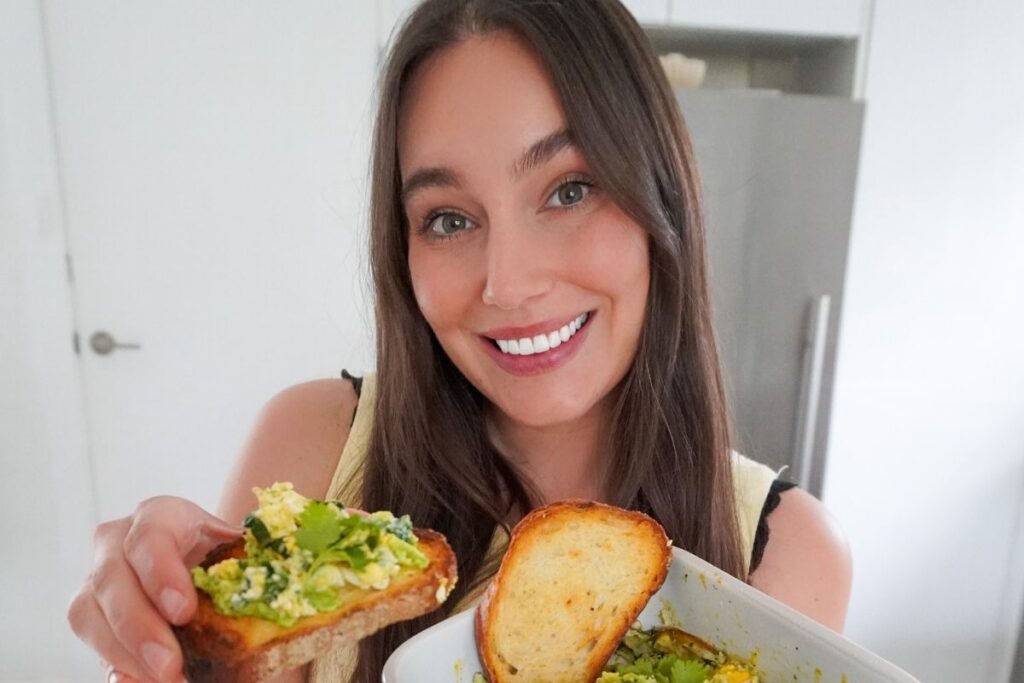
One large egg (the whole egg) provides around 150 mg of choline, making eggs one of the richest dietary sources available. The Adequate Intake for pregnancy is 440 mg of choline per day, so including two or three eggs most days can help you in meeting those needs. The consumption of eggs daily has been a routine part of my pregnancy nutrition and I have felt great because of this. Be open to how you can consume them and also ‘hide’ them in recipes if you’re feeling a little off.
With grocery bills climbing, a lot of families are watching every dollar. What are your top affordable pregnancy nutrition staples?
Some of my favourite budget-friendly staples include:
- Eggs
- Rolled oats
- Greek yoghurt
- Frozen fruit and vegetables
- Canned legumes
- Tinned sardines in olive oil
- Brown rice
- Sweet potato
- Seasonal fruit and vegetables
These foods provide an incredible amount of nutrition for their cost and can be used to create simple, nourishing meals throughout the week.
Does any of this change once bub arrives and mum is breastfeeding?
A mother’s nutritional needs remain high during breastfeeding because she’s continuing to provide nutrients to her baby through breast milk. Choline requirements actually increase during breastfeeding, so continuing to include foods like eggs remains really important. Protein, iron, iodine, calcium and plenty of fluids are also key priorities during this stage.
What’s the one piece of nutrition advice you wish every expectant mum in Australia knew?
One thing I often remind new mums is that looking after your own nutrition isn’t selfish, it’s an important part of supporting both your own recovery and your baby’s health. I wish every expecting mum knew that pregnancy nutrition doesn’t have to be perfect. There’s so much pressure online to eat the “perfect” diet, but in reality, consistency matters far more than perfection. Focus on building balanced meals, including plenty of whole foods, prioritising protein, eating a variety of colourful fruit and vegetables, and choosing nutrient-rich foods like eggs regularly. Those small choices, repeated every day, can have a meaningful impact on both your health and your baby’s development. Pregnancy is a marathon, not a sprint, and nourishing yourself consistently is one of the greatest gifts you can give both yourself and your baby.
Follow KIDDO on Instagram and Facebook, and subscribe to our weekly newsletter