Is Your Baby Carrier Actually Safe? Australian Parents Are Being Left in the Dark
It’s one of the most-used items in a new parent’s arsenal, but most Australians have no idea there are zero mandated safety standards for baby carriers sold in this country.
The Australian Babywearing Association (ABA) has launched its National Campaign for Change, calling on the Australian Competition and Consumer Commission (ACCC) to prioritise infant safety by introducing mandatory standards for baby carriers.
“Parents rightly assume that products sold in Australia have been tested and meet minimum safety requirements, but that’s currently not guaranteed,” says ABA Co-Founder Brooke Maree.
What do international safety standards actually cover?
The ABA is pushing for Australia to adopt or align with internationally recognised safety standards, such as the ASTM International standards used in the United States and the European EN standards. These benchmarks cover critical areas including load-bearing testing, durability of fastenings, fabric strength, chemical safety, and clear labelling and instructions for safe use.
The ABA also wants education around safe positioning and breathing to be included in any future standards, so that products not only meet mechanical safety requirements but actively support safe babywearing practices.
The risks are real
The consequences of unsafe babywearing can be fatal. In April 2019, three-week-old Harvey McGlinn tragically died while being carried in a wrap baby carrier. He was inadvertently positioned unsafely and died by asphyxiation.
“For babies, the risks of unsafe carriers and poor education can be serious, including falls due to structural failure, compromised positioning that can affect breathing, or exposure to potentially harmful materials,” Brooke says.
She has heard of parents whose waistband buckle completely snapped when they bent over while wearing their baby, on a carrier that had been falsely advertised as high quality.
“It smelled like chemicals. It didn’t feel safe.”
First-time mum Mikayla Falls from the Gold Coast listed an Australian-owned baby carrier brand on her baby registry, only to receive something that felt entirely different from what she had expected.
“A close friend of mine bought it for me, and when it turned up six weeks later, it was obvious it had just been drop-shipped from China. There were no safety instructions, it felt poorly made and smelled like chemicals. It didn’t feel safe to put my baby in it,” she says.
The problem is growing
The ABA estimates there are now over a dozen brands being sold in Australia and through online marketplaces that would not pass international safety standards, and that number has grown rapidly in the past 12 to 24 months.
Kirsty Jensen, who works at Kangatraining Australia, a fitness program allowing postpartum mums to safely exercise while wearing their babies, says she encounters the issue daily.
“It is really confusing for parents when they are trying to purchase a baby carrier, and there are all these brands out there that are not actually held to any mandated standard,” Kirsty says. “Because they’ve bought it from a legitimate store, and it might have good reviews, they think it must be okay. But some of these carriers we can’t actually allow in Kangatraining classes because they’re not safe for bub or Mum.”
Australian brands bearing the cost
The gap in regulation is also making life harder for Australian-owned baby carrier brands that do the right thing by investing in rigorous offshore testing before they bring a product to market.
Krystal Tupi, founder of Chekoh, says the testing process is time-consuming and expensive, but she considers it non-negotiable.
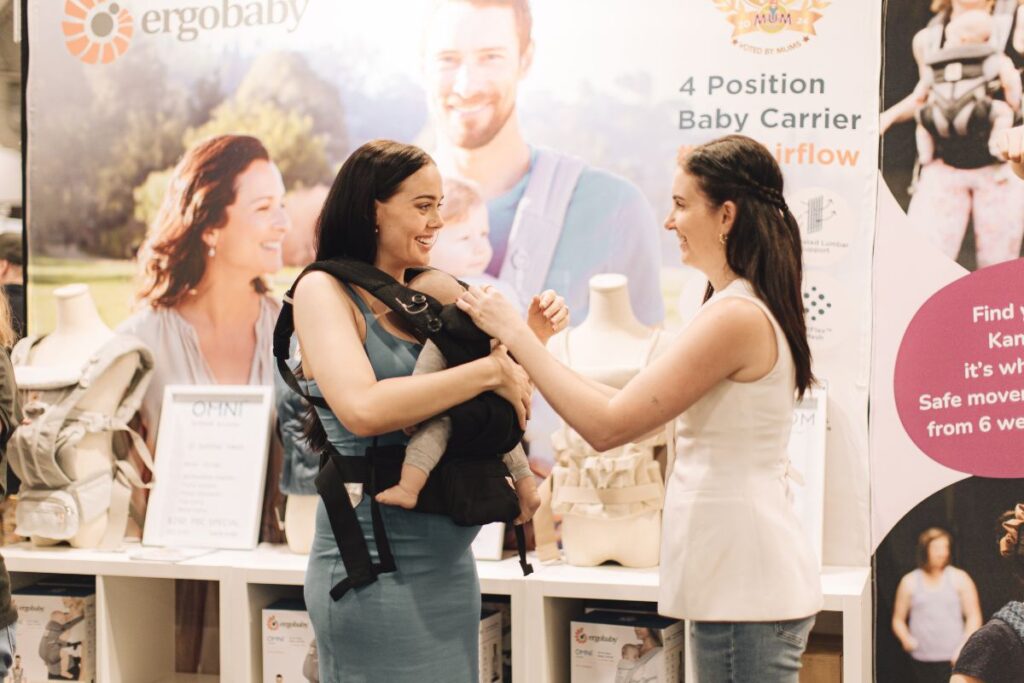
“Often we will be talking with parents at baby expos and they ask about safety standards. We assure them our products are safety tested, but have to explain there is no mandated standard in Australia, which is honestly embarrassing,” Krystal says. “It puts people off buying from Australian brands and it makes it really hard for small businesses like ours. On top of that, there are heaps of cheap knock-off brands that steal our imagery and sell poor quality products with no instructions.”
What can parents do right now?
Until national standards are introduced, the ABA recommends:
- Buying from brands that can demonstrate their products have been tested to ASTM or European EN standards
- Checking that the carrier comes with clear, detailed instructions for safe positioning
- Seeking guidance from a certified babywearing consultant, particularly for newborns
- Being wary of carriers purchased through online marketplaces with no Australian presence or support
If you have had a negative experience with a baby carrier, the ABA is encouraging parents to share their story to help build the case for change. Visit babywearingaustralia.com.au/safety-campaign to find out more or to add your voice to the campaign.
Follow KIDDO on Instagram and Facebook, and subscribe to our weekly newsletter