The Podcast Helping Parents Raise Bright Little Humans
 Interview by Liv Williams
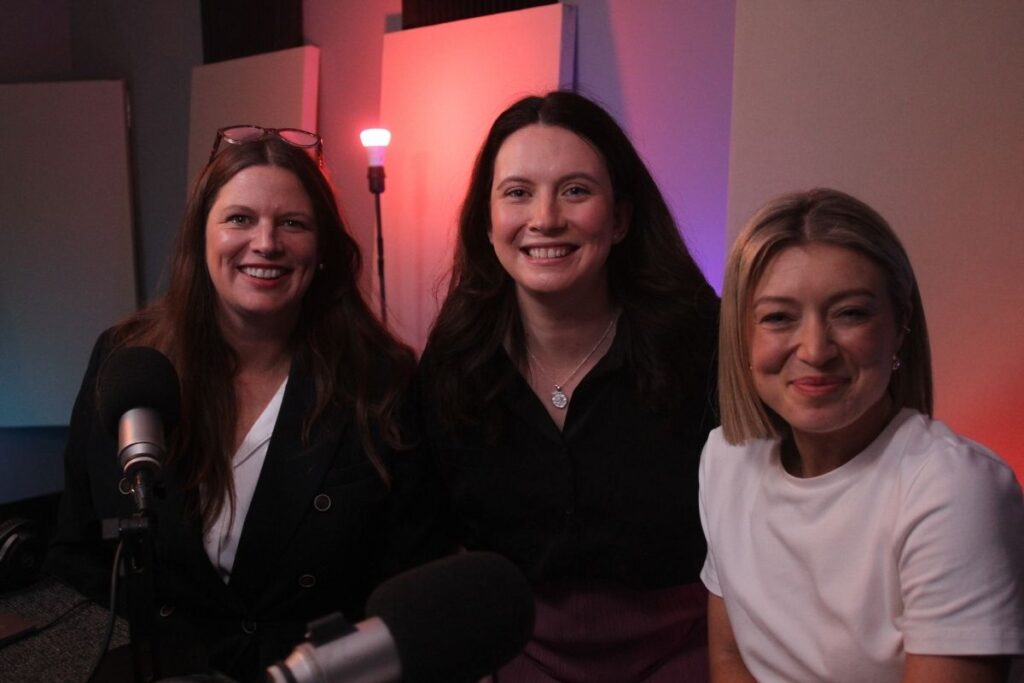
If you’ve ever wished someone could cut through the parenting noise and just tell you what actually matters for your baby or toddler’s development, this one’s for you. Words Grow Minds, a local parenting podcast hosted by Kate Ellis (CEO of Raising Literacy Australia) and Amelia Mulcahy (7NEWS journalist and mum-of-two), delivers expert-backed tips minus the overwhelm. We sat down with Kate and Amelia to chat about parenting pressure, brain-building moments, and the small everyday interactions that have the biggest impact in a child’s early years.
What drew you both to host the Words Grow Minds podcast, and what do you love most about connecting with parents through it?
AM: I’m in the thick of parenting young kids (a toddler and a six year old) and I’ll freely admit to feeling overwhelmed from the information overload that comes from modern day parenting. My skills at doom-scrolling are elite, especially when we’ve been going through a leap, or the latest phase, or a sleep regression to name a few! When Kate told me about the idea behind the WGM podcast – giving parents the latest research in a 30 min chat – I jumped at it. There is so much cool work going on in early childhood development, but unless you’re plugged in to that space, it’s hard to digest it all in amongst the chaos of life. That’s where we come in.
KE: I have worked in the field of early childhood development for many years now and I can’t help but notice how much evidence and research we have into what children need and how we can best support them but how much work there still is to ensure that parents have this information. I’m absolutely of the view that parents and caregivers have the biggest impact on a child’s development, we should equip them with all of the facts.
Many parents feel overwhelmed with the “best start” for their kids. What are the small everyday things that make the biggest impact on early brain development?
KE: I just find it the most amazing thing that science can now literally tell us how to best grow our children’s brains and it is actually remarkably simple. We know that the most effective way to build the pathways in our babies brains is through simple “back and forth” interactions. When our baby gurgles, we gurgle back at them, when they point at something we explain what it is. The great thing is this is something we can all do and when we learn the important impact that it has, we can do it more often.
Emotional regulation is a hot topic for toddlers. What’s one practical tip you think most parents miss?
AM: That your kids feed off you. If you’re calm, they learn to be calm too. Now it is waaaaaay easier said than done – believe me I do not want you to listen to the car rides I have with my kids when we’re running late to school drop – but, every expert we’ve spoken to reaffirms this. The little things you can do to set yourself up for success, whether that’s “giving your stress a job” like making a cup of tea or doing something with your hands in a stressful situation (thank you Madhavi Parker) or, perhaps its learning to pull back on the pressure and expectations you put on yourself. Don’t forget to look after yourself, find your village and make sure you ask for help where you can.
KE: I think for me the game changer was when I stopped and tried to see things through my child’s eyes. Yes, they are upset and throwing a huge tantrum at the most inconvenient time but when I tried to reflect upon why they were upset, what it was that they were really trying to tell me I found the situation so much more understandable.
What’s a simple activity or habit you’d recommend all parents try with their babies this week?
AM: I’m going to borrow from our episode with Dr Andrew Whitehouse… time, space, energy and presence. However you want to do this, whether that is a solid ten minutes reading or singing (even if your six year old tells you to stop because your voice isn’t great). Putting your phone away for a period of time and getting curious with how they play, the research shows time and again that all your little one wants to do is connect with you.
If you could give one piece of advice to parents feeling uncertain about their child’s early years, what would it be?
AM: It’s the best. and you are doing your best. and your kids love you so, so much, keep going.
KE: The early years can be hard and exhausting but all of your efforts now will actually have the biggest impact on shaping your child’s future. It is all so very worth it!
Listen on your podcast app wordsgrowminds.org.au/podcast
Follow KIDDO on Instagram and Facebook, and subscribe to our weekly newsletter