
By Amara Campbell, Speech Pathologist
Pre-literacy skills form the foundation for a confident start to your child’s learning journey. Before children learn to read and write, they develop skills such as recognising letters, listening to sounds in words, understanding stories, familiarity with books and print and building vocabulary through everyday conversations and play. These skills help children feel prepared for the structured learning environment of school, where they will continue to build their reading and writing skills.
Pre-Literacy Skills Established in Preschool
- During the early years, children build important early sound and language skills that form the foundation for reading and writing.
- These skills develop gradually and naturally through play, conversation, stories, and exposure to print, and then through more explicit teaching in their preschool year.
In the year prior to school the following skills are taught and can be reinforced at home:
- Rhyme Awareness – children are taught to generate and understand rhyming words and then start noticing words that sound alike, such as cat, hat, and mat.
- Syllable Awareness – children learn to clap or count the syllables (beats) in longer words, like com-pu-ter.
- Beginning Sound Awareness – children are taught to listen for and identify the first sound in words (e.g., cat, cup, cow all starts with /k/)
- Early Letter to Sound Recognition – children begin recognising letters and linking them to sounds (e.g. the letter ‘kay’ makes a /k/ sound)
Ways to Support Pre-Literacy Skills at Home:
Pre-literacy skills can be practised through play, conversation, and everyday routines. Here are simple ways parents can support each skill at home.
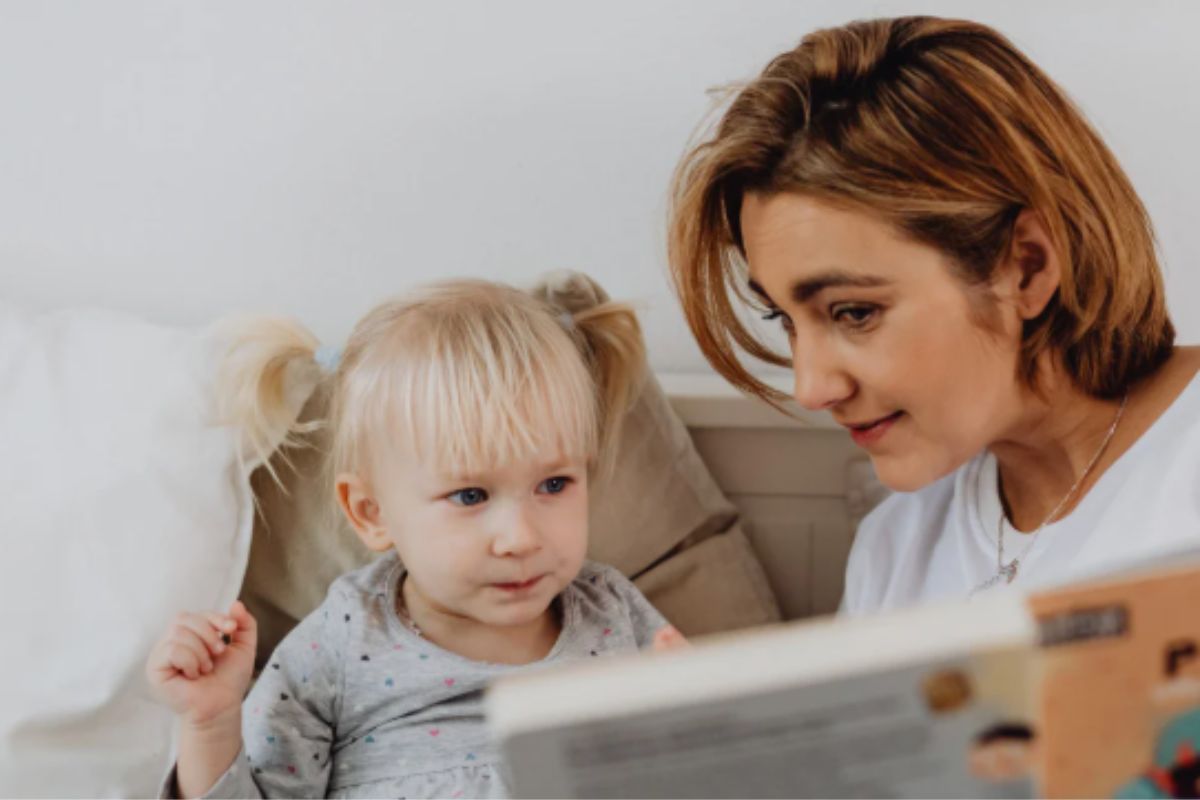
- Reading books together everyday helps children engage with rhyming, vocabulary, initial sound awareness, and letter recognition.
- Singing songs and nursery rhymes builds exposure to rhyming and rhythm as well as developing vocabulary.
- Playing rhyme detective by saying two words (e.g., cat-hat, cat-ball) and asking your child if they rhyme to make a fun learning game.
- Making a Silly Rhyme Chain by starting with a word (e.g., dog) and take turns making silly rhyming words (bog, zog). Making real words isn’t necessary, fun is the goal.
- Syllable Hopscotch by drawing numbers 1–3 on the ground, you say a word and have your child jump to the number of syllables.
- Playing games such as ‘Eye Spy’ is a fun way to help build initial sound awareness skills by trying to find something that starts with a particular sound.
- Mystery Bag Game: put a few toys in a bag, pull one out, and say “I wonder what sound we can you hear at the start of it’s name?”
- Noticing and talking about print you see out in the community by pointing out signs, labels or words to helps children understand that print carries meaning, and familiar letters in the signs.
SPOT PAEDIATRICS
Level 1, 360 Brighton Road, Hove
spotpaediatrics.com.au
Follow KIDDO on Instagram and Facebook, and subscribe to our weekly newsletter