Interview by: Lucy C Budzynska
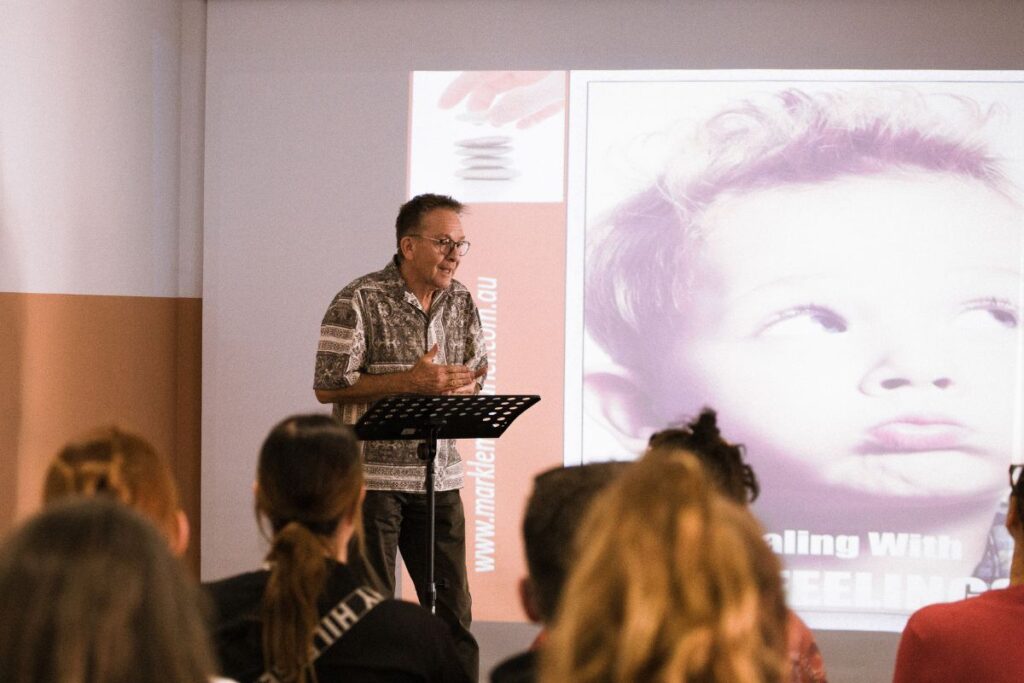
Mark Le Messurier wears many hats – teacher, counsellor, parent and carer coach, and author of several well-known titles including the popular What’s the Buzz? series and Teaching Values of Being Human. In 2022, he was named South Australian Senior of the Year.
Mark has dedicated his career to supporting the self-worth, wellbeing and mental health of young people. Through his work with families, educators and communities, he has become a trusted mentor and relatable role model, helping countless young people and parents along the way.
We sat down with Mark ahead of his next parenting workshop on the topic of What does ‘mis’behaviour tell us? about what parents and carers should expect from the workshop.
What led you to develop this approach to “misbehaviour” in children?
I guess years of experience working with families, particularly parents, and the real troubles they experience in just running their family and working with their kids. We’re often left with an imprint of how to manage our children based on how our parents managed us. Quite often that’s autocratic and a power-over approach, but the world’s changed, kids have changed and expectations have changed. So for me, actually working on a different way of responding to behaviour is very important.
You can still hold a child accountable for something they may have done. But once upon a time, part of a consequence was almost emotionally turning off from a child: you crossed a line, you did something wrong, you’re going to get a consequence plus “talk to the hand”. What we realise today is we can deliver a consequence to a child, if it’s appropriate, but the bottom line is we bring them closer to us emotionally at that time. So we actually lead with strength, but great compassion.
You talk about behaviour being a sign of an unmet need. Can you explain what that looks like in everyday parenting?
The behaviour we see in everybody, whether they are a child or an adult, particularly behaviours we would refer to as difficult or misbehaviour, is really driven by emotion.
A big part of my work is looking at that emotion and asking what it might be telling us. An unmet need is where we go. For example, if a child is having difficulty going to school and is beginning to refuse to go, we understand now that something is going wrong for that child at school. So there is a need to change that behaviour, but rather than tackling the behaviour first, we would actually dig below the surface and look at the unmet need.
What are some common mistakes parents make when responding to challenging behaviour?
Getting caught up in the child’s emotion and in the child’s chaos. For so many of the parents I work with, they often feel like it’s their fault, and there’s a certain level of shame. In reality, it’s actually no one’s fault. Children develop gradually over time. They have to make mistakes. They push boundaries to check that they’re feeling secure.
What impact can this style of parenting have on a child’s confidence and emotional development long term?
We’ve looked really carefully over the years at what style of parenting benefits children, and really it’s the authoritative approach, which is distinctly different from authoritarian. The authoritative approach is where you connect with your kids, you know what they’re up to, and you put time aside to do things with them. You understand they will make mistakes, because that’s what kids do. You try not to get caught up in their chaos. If you’ve got to apply a consequence, you will do that, but as I said before, you’ll bring them closer to you during that time.
We know that when kids are raised within that style of parenting, we get the best outcomes, with children developing in much healthier social and emotional ways.
What’s one small shift parents could make straight away that would have a big impact at home?
This is hard to do, but don’t become part of the chaos. In other words, don’t shout. Have a calm voice. If I’m working with two parents, I say play tag team. If one parent isn’t in the right emotional space, tap out and let the other one step in for a while. Support each other and keep a really low emotional tone.
To hear more from Mark and to work through explicitly how to hold a boundary with strength and compassion, come along to Parenting Matters on Wednesday 10 June from 6:30 pm at Fulham Gardens Primary School. Book now via Try Booking.
Parenting Matters is a collaboration between The Churches of the Western Shores.