
By A/Professor Lyndsey Collins-Praino, Head, Cognition, Ageing and Neurodegenerative Disease Laboratory, School of Pharmacy and Biomedical Science, Adelaide University
Sunday evenings in our house look like I am a general planning a campaign. With diaries spread out before me, I preview the week ahead, working out a strategy to get everyone where they need to be, when they need to be there, preferably with our sanity intact. Sometimes, it feels like our every moment is scheduled as we shuttle the kids back and forth between various activities and commitments.
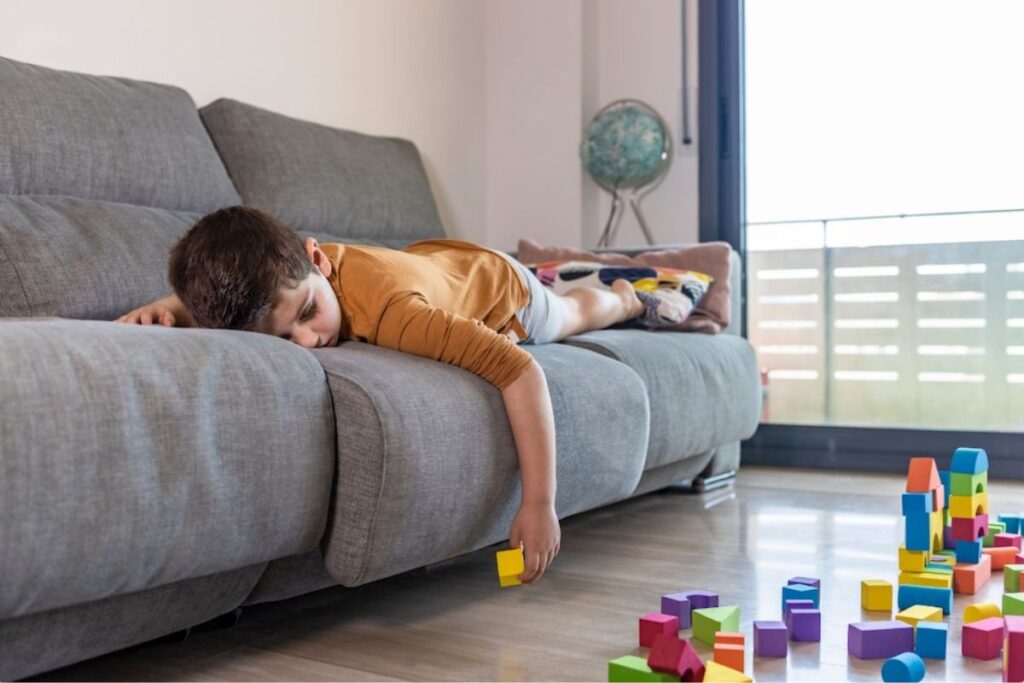
Even on rare occasions when we do find ourselves at home with nothing to do, there’s a chorus of, “I’m BORED! What can we do, Mummy?” My children seem unsure how to entertain themselves without a busy schedule in place. And our experience isn’t unique. Multiple friends and fellow parents have expressed the same thing. When did we start feeling as if we had to be our children’s personal concierge service? What have we lost by not allowing our children time to be bored?
First, let me start by saying that I am not condemning giving children the opportunity to participate in extracurricular activities. Studies show multiple benefits associated with this, including better academic performance, greater self-confidence, enhanced social skills, improved physical and mental health and more opportunities to develop new interests. Engaging in both physical and nonphysical (e.g. music, art, drama) extracurricular activities has also been shown to have benefits for cognitive development, including attention, inhibitory control and problem-solving abilities.
It’s important, however, to acknowledge the potential negative impacts of being overscheduled, including increased stress and fatigue, less family time, neglected schoolwork and poorer sleep. In fact, researchers have even proposed ‘the over-scheduling hypothesis,’ which states that over-participation in organised activities leads to poorer developmental outcomes for children (although research support for this has been mixed). And this doesn’t even consider the financial cost for families. According to research by ING, Australian families spend an average of $1,779 per child per year on extracurricular activities, that’s over $4.7 billion nationwide!
Overscheduling doesn’t allow our children critical unstructured time, in which they can engage in free play. Scientists have long advocated for the benefits of child-driven free play, which fosters empathy and deeper social connections, helps build independence and boosts problem-solving and cognitive function. For example, in a 2018 study of 128 children followed from age four to age five, researcher Portia Miller and colleagues reported that more time spent playing freely at home was linked to better self-regulation and enhanced early reading and maths skills. Similarly, a study by researchers at the University of Colorado Boulder demonstrated that the less time six-to-seven-year-old children spent in structured activities, the better their self-directed executive function.

Free play also helps promote emotional and social development. It provides children with a safe space to gain essential life skills, use their imagination and navigate challenges and conflicts. This, in turn, is associated with a number of positive outcomes, including facilitating emotional intelligence development, promoting resilience and self-regulation, nurturing creativity and improving coping strategies.
The effect of free play on the brain may drive these benefits. Play activates multiple brain areas, such as the prefrontal cortex, striatum and amygdala, areas important for cognition, motor planning, and emotional regulation and social engagement. Play also increases production of brain-derived neurotrophic factor (BDNF), which is critical for the brain’s ability to form new connections (‘neuroplasticity’) and plays a role in learning and memory. It also helps protect brain cells against damage, suggesting that childhood free play may have lifelong benefits.
Concerningly, over the past decades, unstructured time that children spend engaging in free play has declined sharply. For example, one study found that six to eight year-olds spent eight fewer hours per week in free play between 1981 and 1997. Compared to the 1970s, today’s children spend 50% less time in unstructured outdoor play! This is driven by several factors, including a decrease in children’s ability to engage in independent activities, more time spent on schoolwork and structured activities, and increased screen time.
Given its numerous benefits, promoting free time, in which children independently play, without specific structure or guidance from an adult, is critical.
But how can we encourage this?
1. Embrace boredom
When children are bored, they must engage their imagination and creativity to fill their time, while dealing with frustration and developing independence. To support this, brainstorm ideas for what to do when they feel bored. For older children, this might include generating a list of activities that they’d like to try (e.g. learn a new skill, create a comic book, make up a dance). For younger children, this could involve creating ‘boredom boxes’ filled with open-ended toys, arts and crafts materials, or cards with pictures of different activities. When kids feel bored, they already have a starting point, which may help them feel less overwhelmed.
2. Practise persistence
You may need to practise persistence, as you field complaints about boredom. Try reflecting this back using statements such as, “What would you like to do?” or “What have you tried so far?” Don’t, however, get drawn into a long discussion or give in and plan out the activity for your child. Take a breath and remind yourself that you are helping them learn to plan, think creatively, problem solve, build resilience, and more. As children gain confidence in filling their own free time, the complaints will decrease!
3. Remember that it’s a process
Children can take time to get comfortable with unstructured time, and how long they can play independently varies with age. Try to be realistic with your expectations and be prepared to step in and provide support from time to time. This may include initially playing together, suggesting potential activities, or talking through how to extend an activity. Know when it’s time to wrap up independent play and move on to something else.
4. Encourage sharing
Once free time has concluded, encourage your child to share their activities. Be excited and praise their creativity and efforts. Ask them to reflect on what they learned, and what they’re excited to try next.
5. Limit structured activities
There can be lots of benefits to extracurricular activities, but you need to strike a balance. As a family, discuss what your child is most interested in, what is financially and practically manageable and what will still allow for free time. Prioritise activities, selecting the number per week that fits your family’s needs.
Boredom, it turns out, is doing more for our children than we are. Sometimes the best thing a parent can offer is less.
Follow KIDDO on Instagram and Facebook, and subscribe to our weekly newsletter