Here’s the thing about a four-year-old with blurry vision: she doesn’t know it’s blurry. She’s never seen the world any other way, so as far as she’s concerned, this is just what the world looks like. She’s not going to complain about it at dinner, and she’s certainly not going to mention it to her teacher.
That’s exactly why so many childhood vision problems go unnoticed, according to Health Partners optometrist Daniel Wong. “Sometimes they don’t complain because what they’re seeing is all they’ve ever known,” he says. “They assume what they’re seeing is normal – what everyone else is seeing too.”
There’s no obvious symptom to catch, no complaint to follow up on, just a child slowly adapting to a version of the world that isn’t quite in focus. And it’s more common than most parents realise: according to Optometry Australia, one in five children has an undetected vision problem. “It doesn’t surprise me,” Daniel says. “Many vision problems go undetected simply because children aren’t routinely examined. If they’re not complaining and they’re coping reasonably well, it’s easy for issues to be missed.”
Coping reasonably well is the key phrase there. Plenty of the signs of a vision problem look, on the surface, like something else entirely. A child who seems clumsy might actually have reduced depth perception. A reluctant reader might be avoiding a task that’s simply too visually demanding to enjoy. A kid glued to the TV might just be sitting where the picture’s actually clear. “Sometimes this is mistaken for a lack of interest rather than a vision issue,” Daniel says – which means a child can spend years being nudged toward “trying harder” at reading, when the real issue was never effort at all.
This is also why Optometry Australia recommends a test before a child even starts school, rather than waiting for a problem to surface. “Children do much of their learning visually,” Daniel explains. “If they can’t see comfortably, they may struggle to concentrate, become frustrated or avoid reading tasks – not because they aren’t capable, but because the task is too visually demanding.” Research backs this up: Uncorrected vision problems can affect reading performance, classroom engagement and confidence. It won’t be the answer for every child but ruling vision problems out early means it’s one less thing standing in the way.
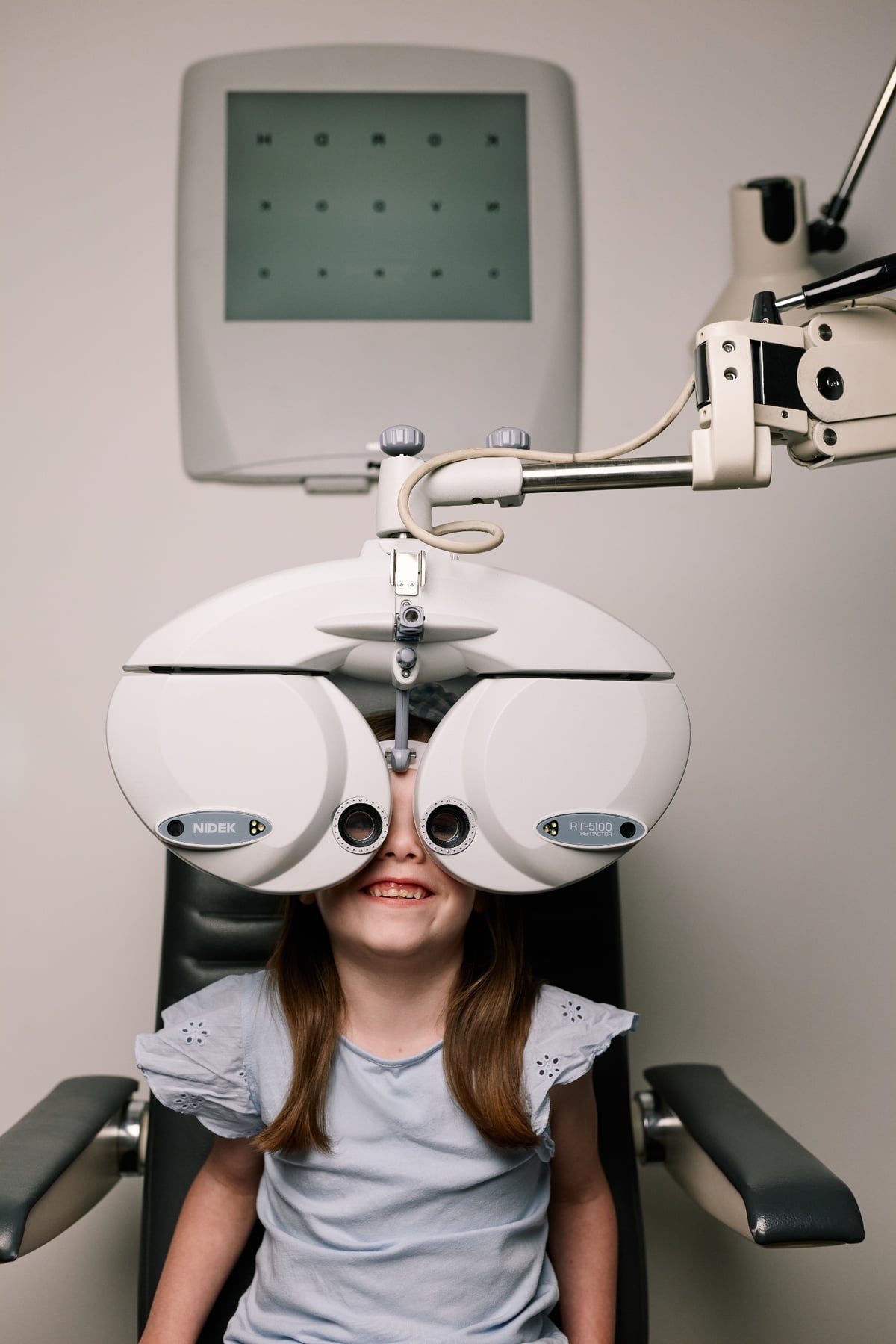
For parents wondering what a kids’ eye test actually involves, it’s a lot less confronting than the word “examination” might suggest. At Health Partners Optical, the exact process depends on the child’s age and stage, but it usually starts with a vision test using letters or pictures, followed by eye movement and colour vision checks, along with a general look at eye health – sometimes including a photo of the back of the eye. Some children will need drops to relax the eyes.
And if there’s one thing Daniel wants hesitant parents to know, it’s that there’s no real downside to getting it checked early. “A comprehensive eye examination gives you a valuable baseline of your child’s eye health and vision,” he says. “Many vision problems develop gradually and don’t cause obvious symptoms, so it’s much better to identify them early rather than waiting until they begin affecting learning or everyday activities.”
Cost is often what turns ‘I’ll get around to it’ into next year. The examination itself is usually the least of it – eye tests can often be bulk billed through Medicare, and gap-free options are available with most current extras cover. If you’re on an older policy, a quick call to Health Partners Optical will tell you where you stand. Glasses are a separate question, and worth asking about upfront: some prescriptions need specialised lenses that cost more than a standard pair.
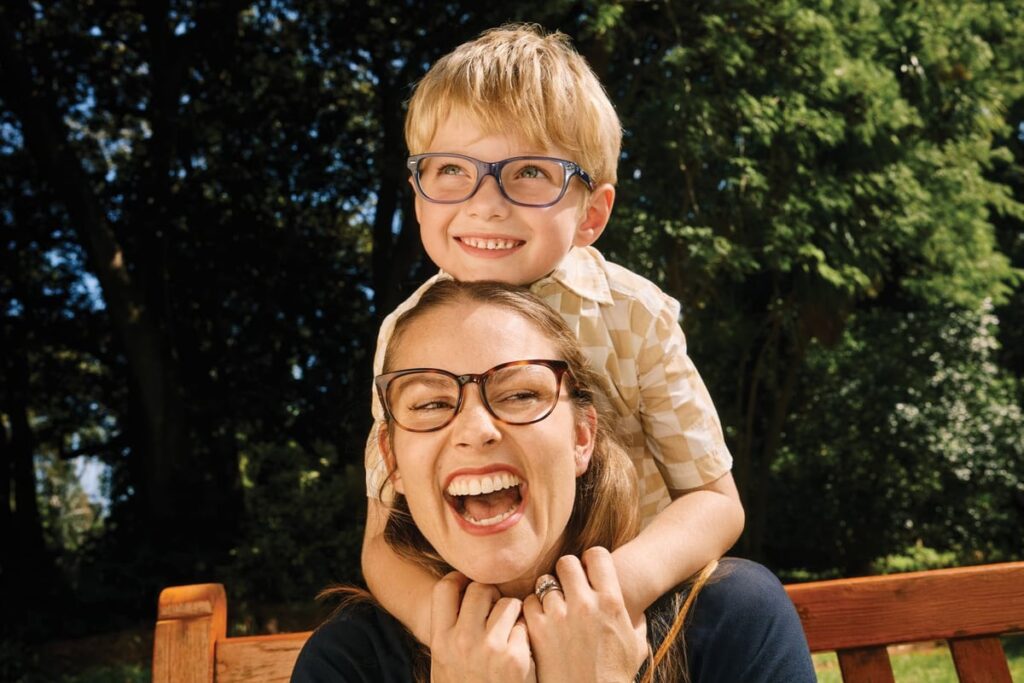
Some of it is written into a family long before a child sits in the chair. Daniel recently tested a young boy for his very first eye exam. His mum has high astigmatism – and it turned out he did too, at almost exactly the same strength, on exactly the same axis. “Astigmatism often runs in families,” he says, “but seeing such a close match always makes you smile. No DNA test needed.”
Which is rather the point. Much of this isn’t about waiting for a problem to show up; it’s about finding out what’s already there.
Ask Daniel what he enjoys most about the job, though, and it isn’t the puzzles. It’s the appointments that end with nothing to fix at all – telling a child their eyes are great and they don’t even need glasses.
With six locations across South Australia, your local store is never far away. Health Partners Optical bulk bill eye tests and welcome all health funds.
Visit healthpartners.com.au to find your nearest optical store.
Follow KIDDO on Instagram and Facebook, and subscribe to our weekly newsletter