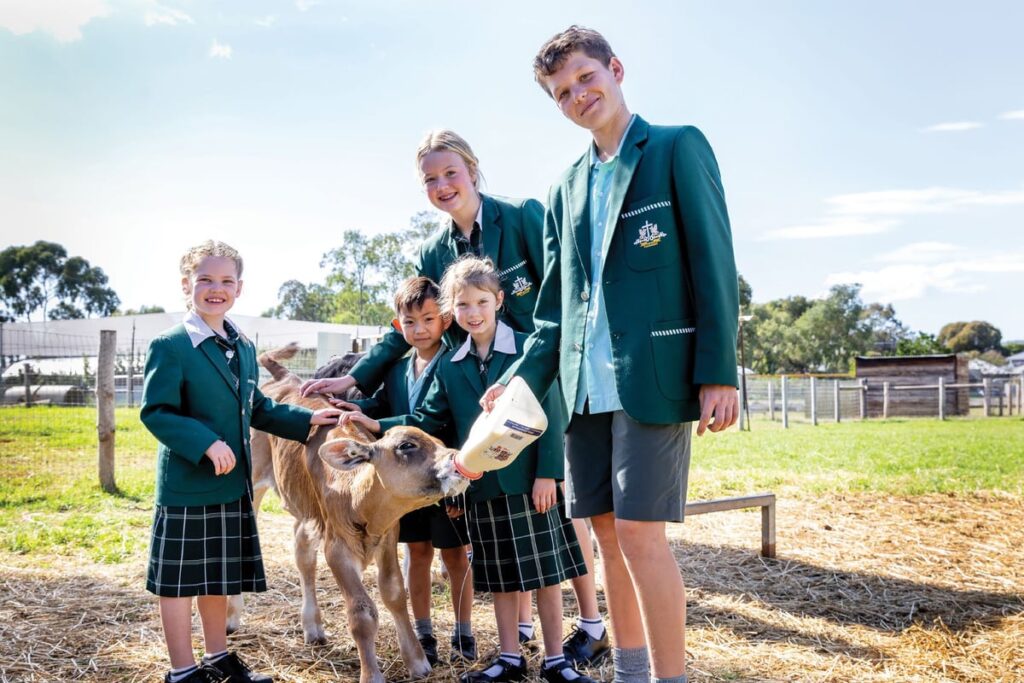
What if Science meant feeding dairy cows? Mathematics involved mapping a working farm? Or Technology helped tell the story of where milk comes from?
At Westminster, that’s just another day of learning.
At the heart of Westminster’s 23-hectare Marion campus sits the Thomas Foods International Centre for Agriculture, home to the Sturt Grove Farm. More than a school ag farm, it is a living classroom where curiosity is sparked, questions are encouraged and learning comes to life through authentic experiences.
It’s all part of Westminster’s distinctive approach to adventurous education, where learning extends well beyond the classroom and students develop confidence, curiosity and practical skills by engaging with the world around them.
This year, every Preparatory School student from Reception to Year 6 took part in Little Farmers, Big Adventures, an immersive program introducing children to food production, sustainability and animal care through hands-on experiences.
Rather than simply reading about agriculture, students experienced it.
While Reception children were examining barramundi skeletons and harvesting herbs from the garden to make fresh pesto for a shared pasta lunch, Year 1 students were meeting the farm’s dairy cows and chickens before transforming their discoveries into information texts back in the classroom.
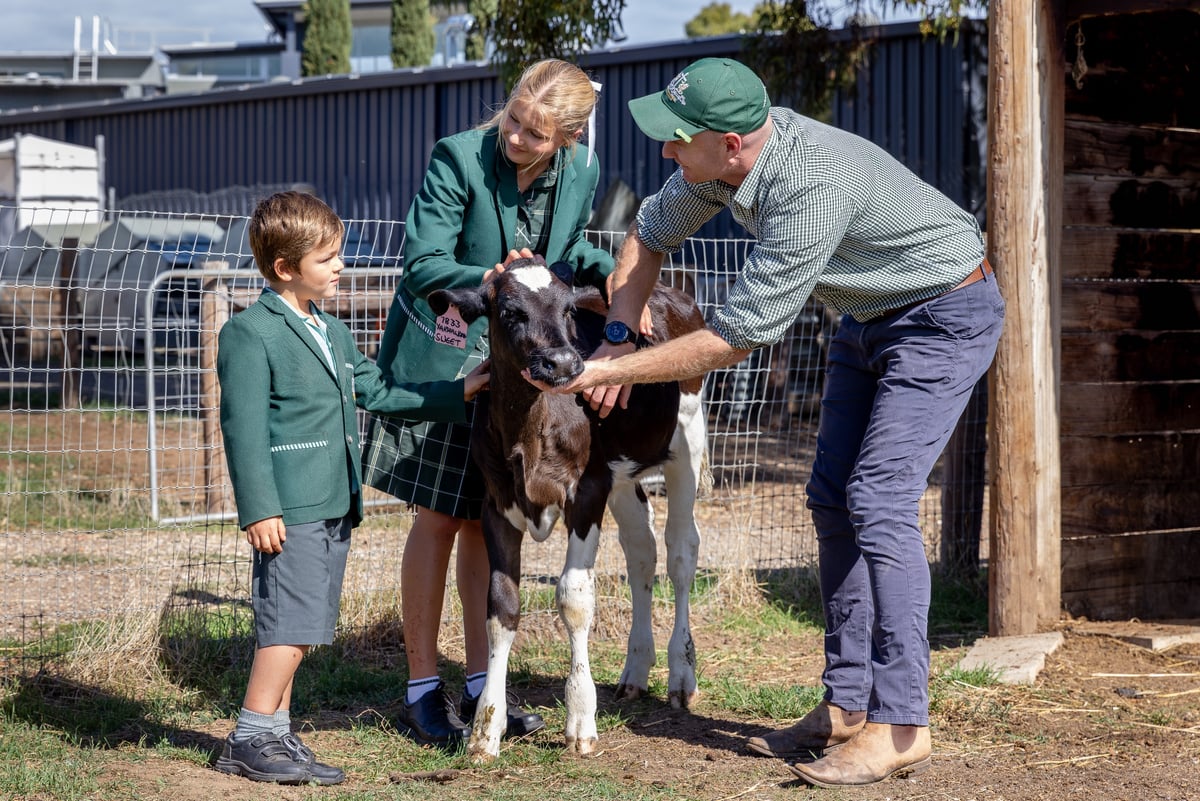
Older students combined Agriculture with Digital Technologies by creating stop-motion animations linked to QR codes, allowing visitors to follow milk’s journey from paddock to plate. They investigated the science of dairy production, explored milk composition and applied mathematical measurement skills to map sections of the working farm.
According to Westminster Preparatory School Deputy Principal Bec Scudds, these authentic experiences help children develop a deeper understanding because they are actively involved in the learning process.
“Children learn best when they can see, touch and experience the world around them,” she says.
“We want children asking questions, solving problems and making discoveries for themselves. When learning is connected to real experiences, it becomes more meaningful, more memorable and far more exciting.”
These experiences are possible because Westminster offers learning opportunities unlike any other. Alongside its dairy and grazing yards, the Sturt Grove Farm is home to chickens, barramundi, aquaponics, greenhouses and sustainable food production systems, providing authentic opportunities for students to explore Science, Technology and Agriculture in action.
One of the unique aspects of learning at Westminster is that these experiences continue throughout a student’s entire educational journey.
Preparatory School students regularly learn alongside Senior School Agriculture students, who mentor younger classes and share their knowledge of farming, sustainability and food production.
Head of Preparatory School Simon McKenzie believes these connections help children see what’s possible.
“One of the most powerful aspects of a Westminster education is that younger students can see where their learning might take them,” he says.
“They don’t have to imagine the future. They see older students applying their knowledge every day, helping them understand how learning can lead to innovation, leadership and real-world impact.”
Those possibilities become even more evident inside Westminster’s integrated aquaculture greenhouse.
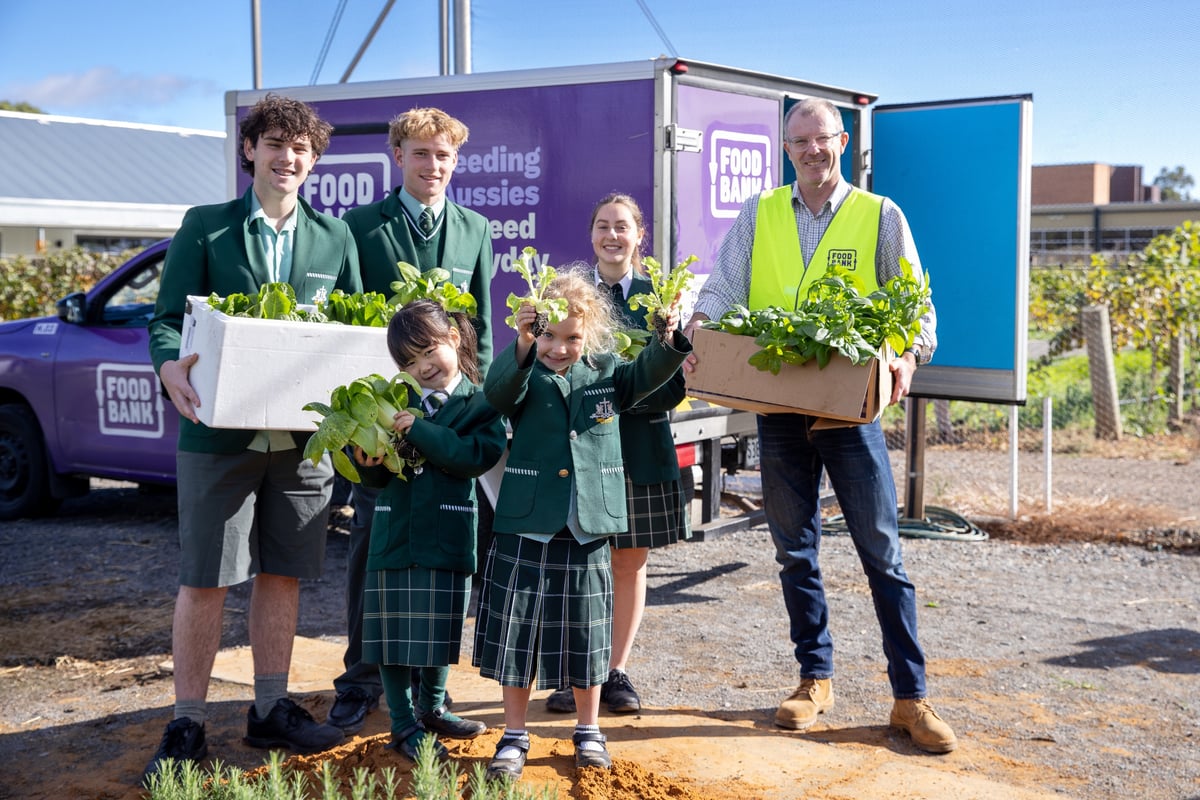
Last month, Year 12 Agriculture students were investigating sustainable food production by raising barramundi alongside leafy greens in a connected ecosystem where nutrient-rich water from the fish nourishes the plants.
The project produced an unexpected outcome. The harvest was so successful that Westminster donated a truckload of fresh leafy greens to Foodbank South Australia, helping provide nutritious food to families experiencing food insecurity across the state.
For younger students, it was a powerful reminder that learning doesn’t just build knowledge. It can make a genuine difference in the wider community.
Head of Agriculture Andy Malcolm says understanding agriculture has never been more important.
“Every child should understand where their food comes from,” he says.
“Agriculture helps students think critically about sustainability, food security and the challenges facing modern food production. Whether they pursue careers in agriculture or not, these are lifelong lessons that help young people become informed, responsible citizens.”
From their very first encounter with the Sturt Grove Farm in Reception to leading innovative sustainability projects in Year 12, Westminster students experience an education that is purposeful, connected and deeply engaging.
At Westminster, learning doesn’t stop at the classroom door. It unfolds in paddocks, greenhouses and purpose-built learning spaces where curiosity leads the way and every experience helps children see new possibilities.
Because sometimes the most powerful learning doesn’t happen by reading about the world. It happens by stepping into it.
Westminster School
1/23 Alison Ave, Marion
westminster.sa.edu.au
Follow KIDDO on Instagram and Facebook, and subscribe to our weekly newsletter