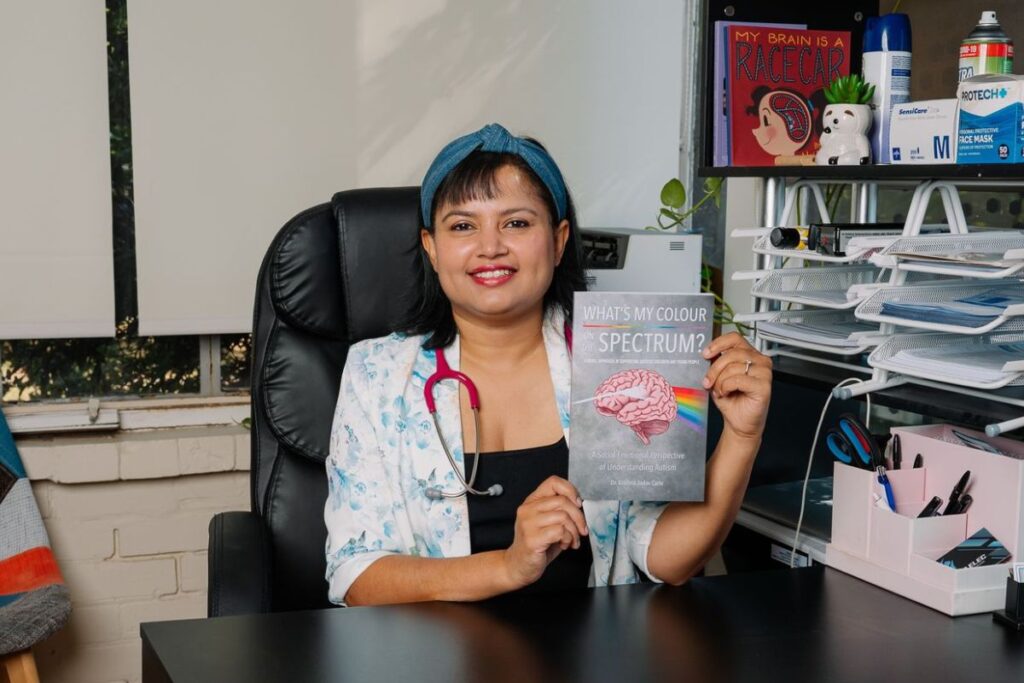
By Dr Krishna Jadav Carle, Developmental Paediatrician
This afternoon I met a ten-year-old girl and her mother for a routine follow-up.
She didn’t want to come into the consultation room. When invited, she refused. In the waiting room, a kind receptionist tried to distract her, cheer her, draw her into conversation. It didn’t help.
With time ticking, her mother and I began without her. Near the end of the appointment, she decided she was ready.
She walked in, locked eyes with her mother… and crumpled!
Her face flushed crimson, tears streamed, words came in fragments…
“I wanted to come… but you left me!”
Then she dropped to the floor, as though her body could no longer hold the weight of what she felt. Her mother offered a hug. She couldn’t receive it. Her nervous system was overwhelmed.
A few minutes later, with my supported validation and a sensory object to anchor her body, she began to settle. She sat up. Her breathing slowed. She even left with a small smile.
Not every story ends that way, and not every dysregulation looks like tears.
Sometimes it is yelling. Stomping. Thrashing. Slamming doors. Spitting. Threatening. Storming out.
‘Challenging behaviour’ is one of the most common reasons autistic children are brought to see professionals like me. But when we peel back the layers, what we find is almost always the same thing: emotional dysregulation.
If there is one thread that runs through these behaviours, it is this: autistic children feel deeply, intensely, quickly. Their emotions run at high frequency and high pitch. They build fast and spill over.
Whether it looks like collapse or aggression, the nervous system story is identical: overwhelm.
I often explain it using a simple metaphor, the electrical safety switch. When moisture gets into a switchboard, the circuit trips to prevent damage.
An autistic nervous system is exquisitely sensitive to cues of unsafety.
Unsafe might mean sensory overload. New or unknown experiences. Unfamiliar people or environments. It may be the relational strain of feeling judged, disliked, misunderstood, or treated unfairly.
Anxiety is so common in autistic children because their safety radar is finely tuned. When something signals threat, sensory or relational, the switch trips.
And then comes fight or flight.
Fight looks like shouting, threatening, lashing out, appearing bigger or stronger.
Flight may look like withdrawal, refusal, hiding, collapse.
Yet, both are protective!
None are intentional disrespect, bad character or rudeness. They are automatic survival responses.
Autistic children feel deeply, intensely, quickly. Their emotions run at high frequency and high pitch. They build fast and spill over.
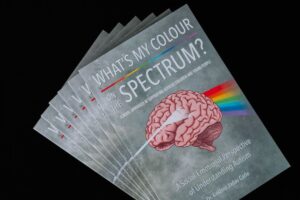
In my book What’s My Colour On The Spectrum? I describe seven variants of social emotional profiles of autistic kids and youth. One underpinning fact is that each profile’s core need is rooted in the need for safety.
This is where one concept becomes essential: co-regulation.
No child learns self-regulation alone. Regulation is first experienced in relationship.
When a child repeatedly experiences safety and acceptance while dysregulated, their nervous system slowly learns that it does not always need to trip the switch. This can often take several years, not months.
The prefrontal cortex, the part of the brain that helps calm emotional surges, continues developing into the early twenties, sometimes beyond. A fifteen-year-old in meltdown is not a big child who should know better. They are a developing brain in fight-or-flight.
Without consistent co-regulation, some autistic children grow into autistic adults whose safety switch still trips quickly, leading to chronic anxiety, anger, and fractured relationships.
If we want to reduce generational trauma and improve long-term mental health, we must start with co-regulation. When a child is dysregulated, there is no access to reasoning or logic. No capacity for learning.
The adult’s task is to stay regulated first.
Lower your voice.
Soften your posture.
Sit at or below eye level.
Use language of connection like “I am here… You’re safe”… or sometimes no language at all.
If the adult’s safety switch trips too, escalation multiplies.
But when we remain calm, something powerful happens: the child’s nervous system begins to borrow our regulation.
Only after safety returns can we address boundaries, repair, or expectations.
Even demand avoidance makes more sense through this lens. When a nervous system is constantly scanning for safety, autonomy becomes protective. Tasks that feel imposed or overwhelming trigger resistance. Break them down. Offer choice. Explain the why. Build predictability. Reduce sensory stress. Then the safety switch trips less often.
If I could leave parents and educators with one enduring message, it would be this:
Safety before learning.
Connection before correction.
Regulation grows from there.
What’s My Colour On The Spectrum? by Dr Krishna Jadav Carle introduces a fresh, compassionate way of understanding autism through the lens of neurodiversity rather than disability. RRP $31.99.
Follow KIDDO on Instagram and Facebook, and subscribe to our weekly newsletter