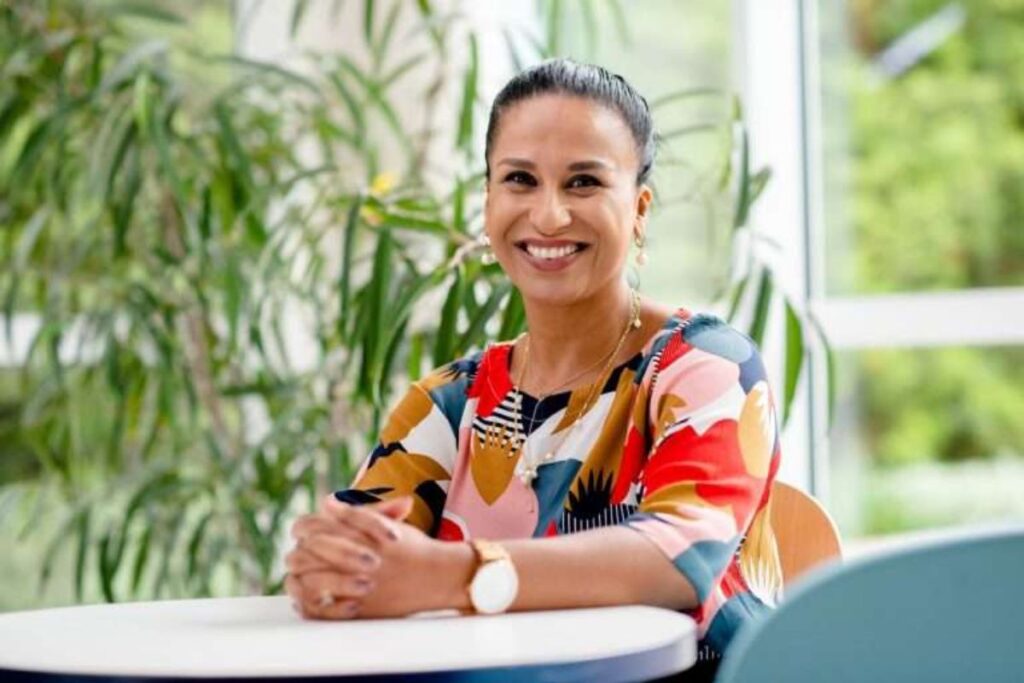
By Madhavi Nawana Parker, CEO at Positive Minds Australia, Keynote Speaker, and Behaviour Consultant
I loved pre-natal classes, soaking up knowledge from midwives and experts about pregnancy, labour, feeding, wrapping, and settling. When we got to the part where we practised nappy changes on our very cooperative, still, and not a real-life baby, toy monkey, that was the icing on the cake.
Pre-natal classes are valuable and couldn’t possibly cover everything. I just wish there was a part two, for when you’re no longer running off the exhilarating, anticipatory joy of starting your next chapter and you have your real-life baby.

No matter how prepared you are, your baby will be their own person. Personality, temperament, and genetics are powerful, impacting how children respond to the family they are given and the environment they are raised in. It’s not easy and it’s not meant to be easy. Trial and error aren’t signs of failure. It takes trial and error to figure out what your baby, that unique once-off, never to be repeated person in front of you, responds to and rejects. Parenting is emotional work.
Don’t get me wrong, being a parent is awe inspiring. Something you will be proud of for the rest of your life. You’ll learn more about yourself, life, purpose and meaning than you ever knew possible, all thanks to this tiny person who’s just entered your world.
I remember staying up all night staring at our firstborn in wonder. I got excited when I thought she needed a nappy change because it was so cute and loved the way she just lay there being so sweet. At this point, I had now changed about ten out of the 4,000 ish nappies that would follow over the next two years. Also, she didn’t really know she was born yet so she was as still as that little toy monkey at prenatal class. I couldn’t wait to go home and start life as a family.
Enter baby number two and three. Again, I fell in love with these tiny creatures with miniature hands and feet. Nappy changes weren’t as exciting, but they weren’t bad either, a practicality that was totally doable. When they offered me an early discharge from hospital (because everything was going well), I politely declined, and fast. Everything going well was exactly the reason I wanted to stay. I wanted the room service, the TV on tap, that perfect newborn bubble, having all the support I needed and a bed that was miraculously made every time I came out of the shower. Magic.
My best advice, before the other advice? Give yourself permission to be human.
Expect the unexpected. Frustration, disappointment, anger, sadness, not knowing what to do, exhaustion, wanting to put them back in is all completely normal. Babies are emotionally unpredictable. Order and predictability were left behind in the delivery room.
Feeling emotionally uncomfortable when your baby is emotionally uncomfortable (while learning how to self-regulate through those uncomfortable emotions) is part of the learning curve. In prenatal class, we focus so much on the baby, but the emotional state of the parent is not a side note. It is central.
The single most powerful parenting strategy available? Mastering how to stress less and connect more, especially when our child is losing the plot. Our ability to regulate gives our children the best chance of developing healthy self-regulation, and emotional intelligence that lasts a lifetime.
Babies and children are exquisitely sensitive to the emotional world around them. They feel tone, rhythm, breath, and tension long before they understand words. This doesn’t mean you need to be calm all the time (no one can be). It just means you need to look after yourself enough that you have the bandwidth to manage your own emotional state in a healthy way, most of the time.
The prize for all this effort? You will awaken a depth of character, courage and resilience that will advantage you for the rest of your life in more ways than you could dream of.
Parents, we can do hard things. (If the hard things are based on realistic expectations of ourselves, and our babies).
Every baby arrives with a unique nervous system, temperament, and set of needs. Some babies settle easily. Others cry more, sleep lightly, or need constant closeness. Some babies adapt quickly, others take much longer. Breastfeeding does not come naturally to everyone. Not everyone falls in love with their baby at first sight. Prenatal classes can unintentionally give the impression that if you do everything “right,” things will unfold naturally. When they don’t, especially with your first baby, it can feel like you’re failing.
There are no perfect parents, and we all make mistakes — loads of them. Babies and children don’t need perfection; they need connection and an emotionally safe environment. Becoming the best version of yourself as a parent takes time, skill development and support.
In Australian culture, we tend to value and celebrate independence and “just getting on with it.” When you have a child, they are far from independent and it’s impossible to just “get on with it,” without compromising your own emotional health.
It truly does take a village to raise a child. You’re not meant to do this alone. You’re not meant to do this without rest. You can’t regulate the intense emotions of raising a family if you’re largely doing this on your own and not resting — a lot. Parenting without emotional regulation skills and enough emotional resources and support is a recipe for disaster. If that’s you, please drop your standards, eat Weet-Bix for dinner sometimes, turn your back to the mess, have pyjama days, lower your expectations, have a cry, watch good Netflix, and please tell someone.
The best gift a parent can give a child is a happy enough and emotionally regulated parent. The rest really does fall into place, promise.
Love, Madhavi
Madhavi Nawana Parker is the author of Unmad: Stress Less and Connect More.
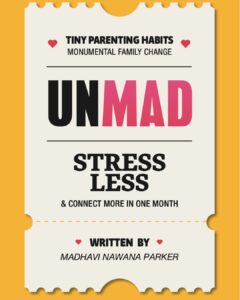
Find out more at positivemindsaustralia.com.au/books/unmad