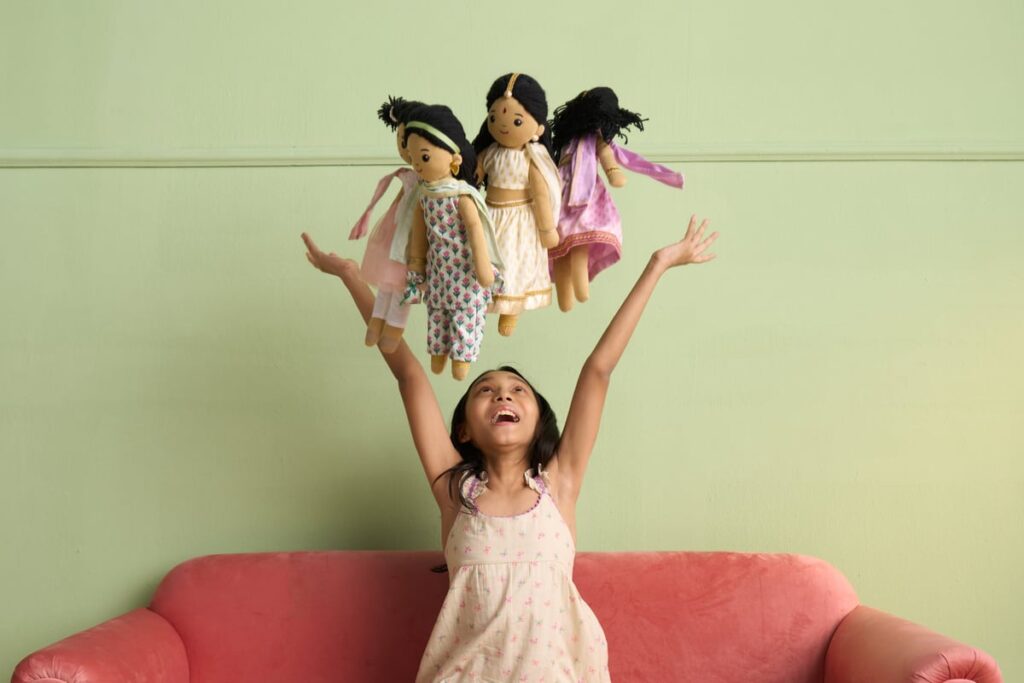
When Adelaide mum Reena’s son was born, she went looking for a doll that looked like him. The closest she could find was Mowgli from The Jungle Book.
“When my son was born I looked for a doll that looked like him – ideally I wanted something that looked Indian. There were very few cute boy dolls on the market, and virtually none with brown skin!” she says.
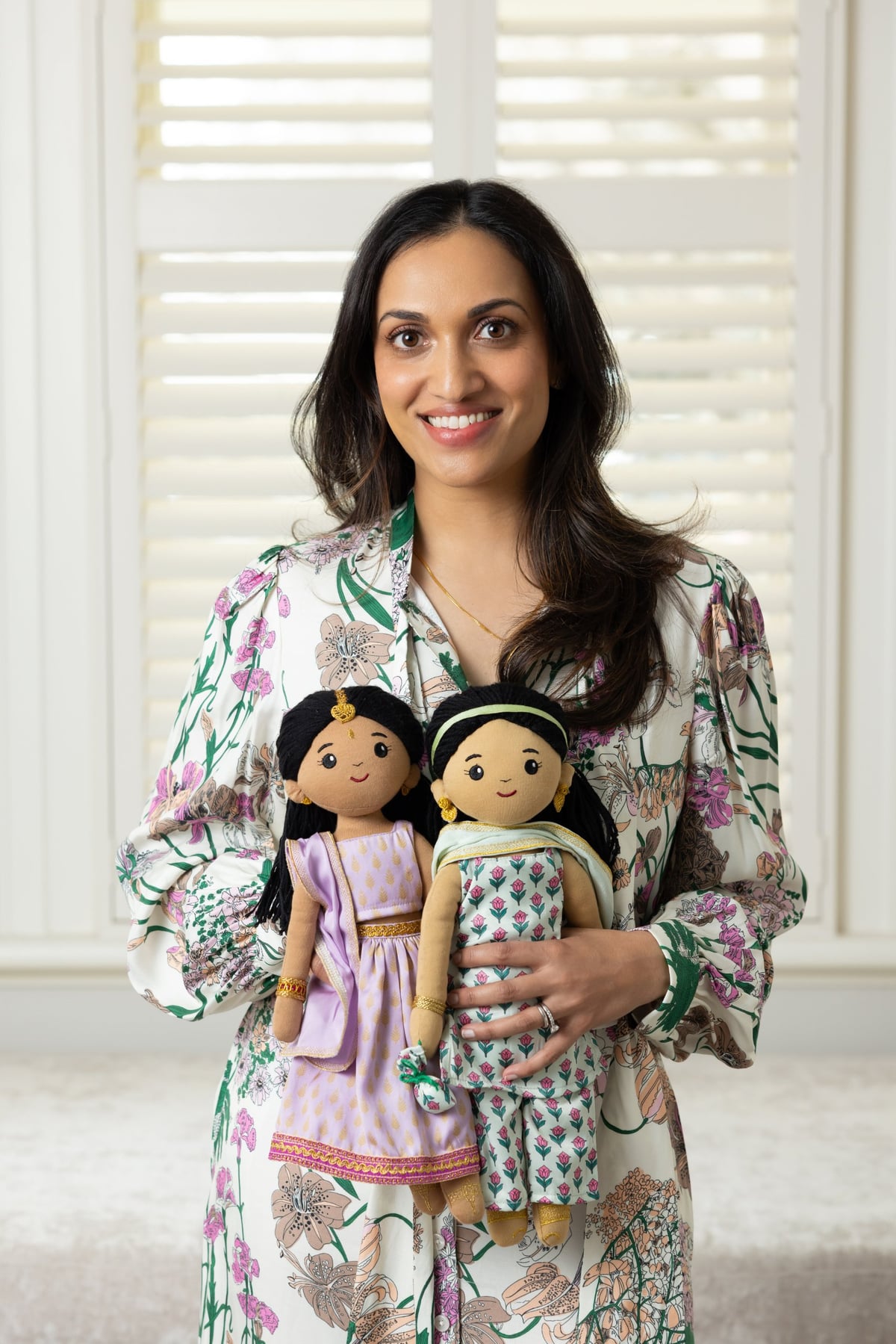
Seven years and two daughters later, Reena has solved the problem herself. Cardamom Baby is a collection of soft, beautifully detailed rag dolls that celebrate contemporary South Asian culture. They’re designed in Australia and ethically handmade in Sri Lanka.
From the courtroom to the toy box
Reena is a second-generation Indian-Australian. Her parents arrived in South Australia in the early 70s: her mum as an immigrant from Malaysia and her dad as a refugee from Uganda, both of Indian heritage. She’s a lawyer who has worked in litigation in Adelaide and New York, where she completed a Master of Laws at Columbia.
“We ultimately decided to settle back in Adelaide for family reasons, and we now have a son and two girls aged 7, 4 and 1.”
By the time her girls arrived, the doll aisle had become more diverse, but Reena still couldn’t find anything that reflected South Asian culture or fashion. Then Mattel released its first Indian Barbie.
“During that time Mattel released the Diwali Barbie, the first Indian Barbie, which was wildly popular, and this confirmed for me that there was a market for this, and I knew others were searching like I was.”
Designing a doll from scratch
While on maternity leave with her third child, Reena started sketching. She pictured a premium rag doll that looked chic on the shelf but was soft enough for little hands to squeeze. She also wanted a different colour palette from the one most people associate with Indian clothing.
“I wanted to steer away from the traditional colours that people associated with Indian clothing (think bold golds, reds and greens) and opt more for a softer palette that incorporated elements and motifs from traditional Indian culture.”
Armed with mood boards of heritage architecture, jewellery and block printing, she approached industrial designers and fashion start-up groups.
“They suggested I needed a tech pack as a starting point and it all sounded very complex and expensive!”
The breakthrough came when she found Jasnor Australia, a Melbourne toy distributor that also does custom toy development. They liked her designs, and the dolls went into sampling.
Meet the dolls
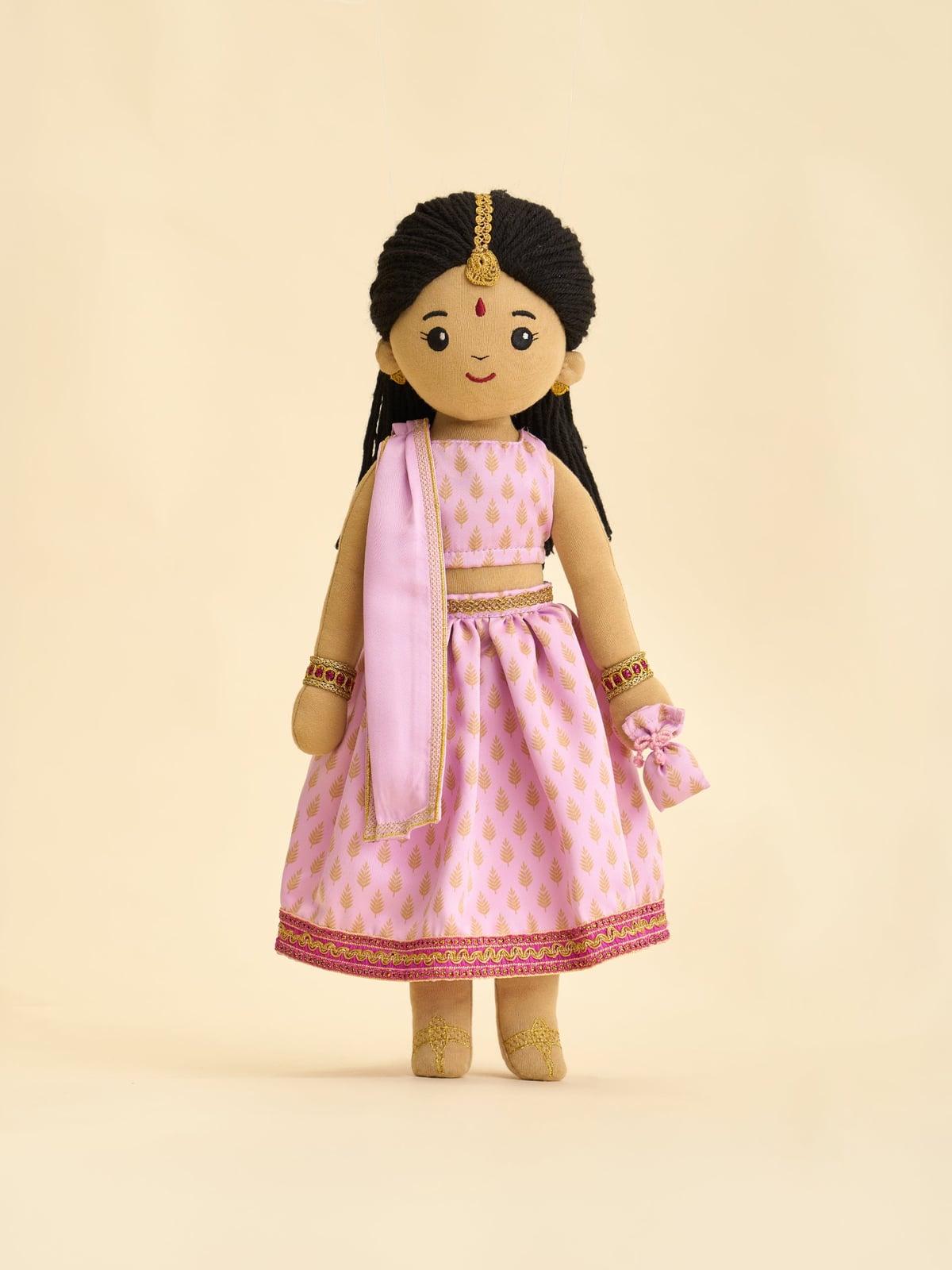
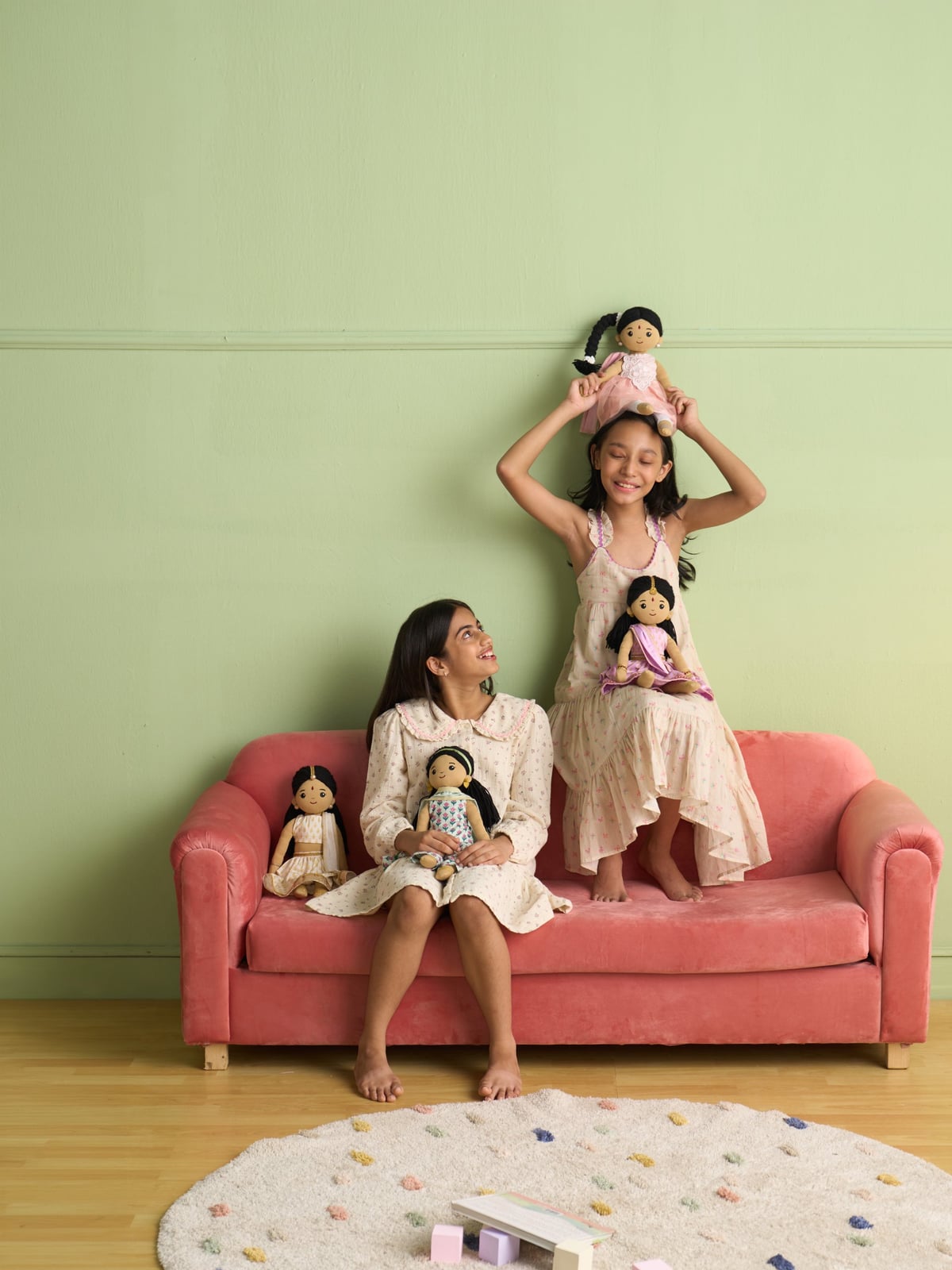
The first collection features four girl dolls, though Reena has promised her son a boy doll will follow. Each one is based on one of her own favourite Indian outfits. Instead of the sari, which children don’t usually wear, the dolls are dressed in lehengas (skirts and tops) and kurtas (long tops and pants).
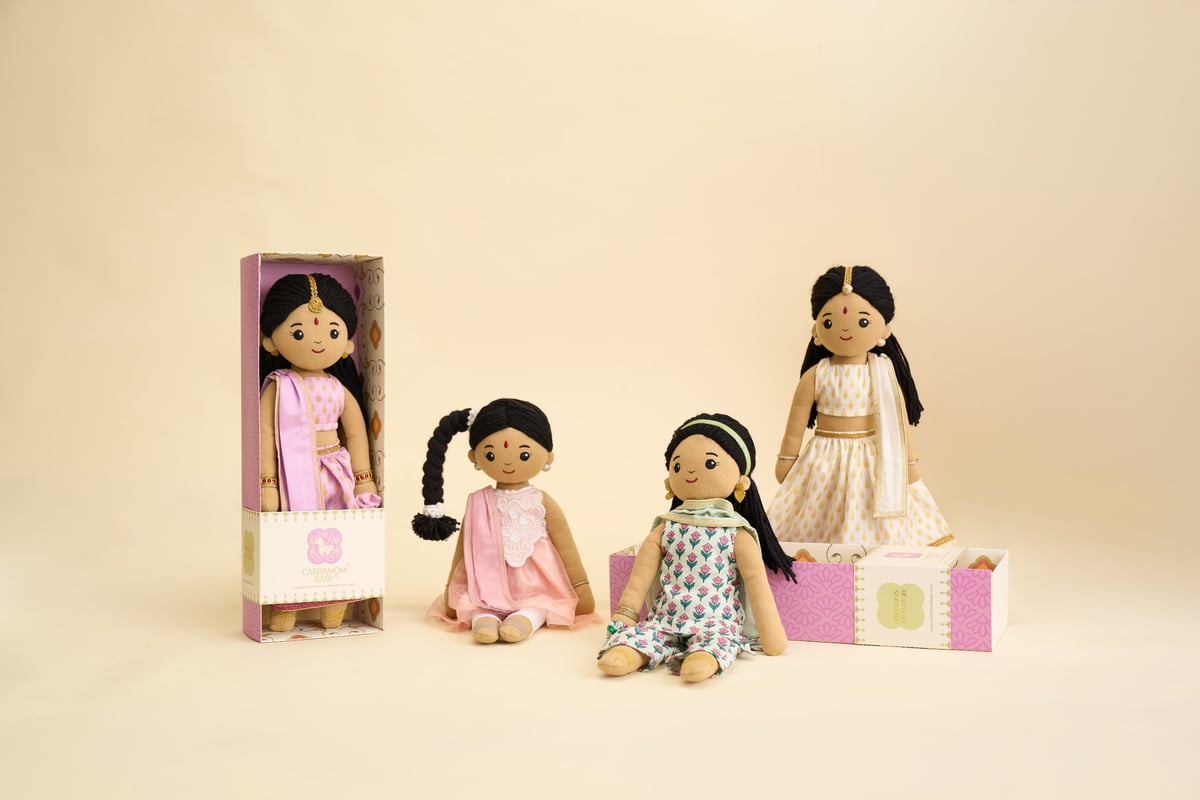
Every detail is considered, from the embroidery on the waistbands and the borders on the skirts to the pleating of the shawls, the bangles and headpieces, the stitching on the chappals (sandals), the voluminous hair and the little potli bags.
“The details mattered and I couldn’t be happier with how they turned out.”
Why Sri Lanka
Most of the world’s toys are made in China, but Reena wanted her dolls made somewhere closer to the culture they represent.
“But it didn’t make sense to me to have a South Asian doll that wasn’t made by South Asian people.”
The dolls are handmade by a WFTO-certified (World Fair Trade Organization) manufacturer in Sri Lanka. Fair pay, safe conditions and skills passed down through generations gave Reena confidence in the partnership.
Why representation in toys matters
For Reena, Cardamom Baby is about more than dolls.
“Play shapes how children see themselves, understand others and make sense of the world.”
“Importantly though, I think that children need to see their culture reflected in ordinary, everyday play – not just on special occasions or as something viewed as novel or different. It helps reinforce the message that their identity and culture belong just like anyone else’s.”
What’s next
Boy dolls and matching swaddles have been on Reena’s mood board since day one, and she’d love kids to be able to match with their dolls. Her own kids are already fans. Two of the dolls are named after her daughters, and her youngest is often walking around the house with one in each arm.
Shop the collection at cardamombaby.com and follow along at @cardamom.baby
Follow KIDDO on Instagram and Facebook, and subscribe to our weekly newsletter