
You’re walking down the stairs with your newborn and, out of nowhere, your brain shows you a vivid picture of tripping and dropping them. Your heart lurches. You grip the rail a little tighter. Then comes the worse thought: what kind of mother thinks that?
As it turns out, almost every kind. Intrusive thoughts are one of the most common and least discussed parts of becoming a new mum, and author Lauren Novak wants that to change.
What Lauren Novak’s survey revealed
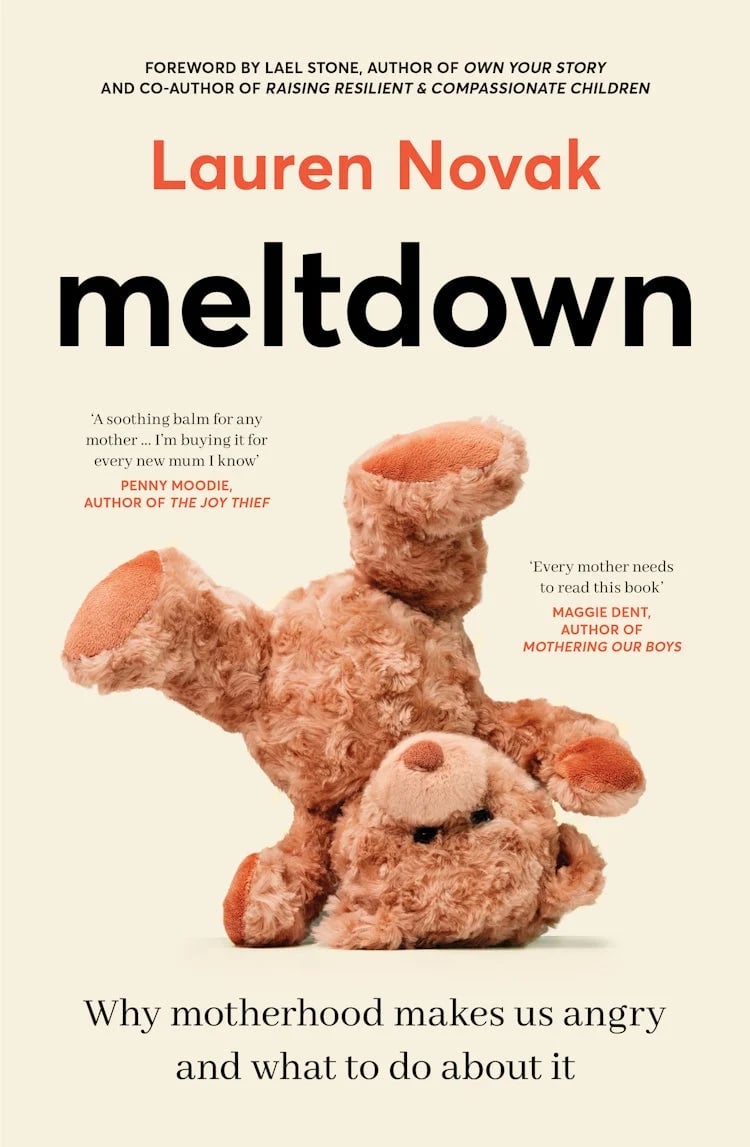
When Novak was researching her book Meltdown, about anger in motherhood, she ran an anonymous survey of more than 200 Australian mums she called the Angry Mums Club. The answers were frank. Almost two-thirds had screamed at their child, and half had imagined running away from their families on bad days.

One result stood out to her for the opposite reason. “I was a bit surprised to see that only one in five mums answered yes to the question of whether they’d had an intrusive thought about harming their child,” she says.
Why surprised? Because the research says the real number is far higher.
How common are intrusive thoughts after having a baby?
“Academic research has actually found that 100 per cent of new mums (yes, all of us) have intrusive thoughts about accidentally harming our baby (like imagining dropping an infant) and half of new mums have them about deliberate harm (like smacking a child),” Novak says.
So if only one in five mums in her survey said yes, even when they could answer anonymously, many more were likely having these thoughts without recognising them, or without feeling able to say so.
Why mums don’t talk about intrusive thoughts
The thoughts themselves are a big part of the silence. They tend to arrive as sudden, unwanted flashes: an image of the pram rolling onto the road, the bath water getting too deep, a moment of losing it at 3am. They feel shocking because they are so far from what you want.
“These vivid flashes of images or ideas are distressing and confusing, so we don’t talk about them,” Novak says. “But I wish more mums knew how common they are, and that having an intrusive thought doesn’t mean we agree with it, or would act on it.”
The fact that these thoughts upset you is a sign of how much you care. Many parents find that once they learn how common intrusive thoughts are, the thoughts lose some of their grip.
When to get support
For most new parents, intrusive thoughts come and go without needing treatment. It’s worth talking to your GP, child and family health nurse or a perinatal mental health service if:
- the thoughts are frequent, or you can’t shake them
- they make you avoid your baby or everyday tasks such as bathing or nappy changes
- you’re feeling persistently anxious, low, angry or not like yourself
- you’re worried you might act on a thought
Asking for help won’t get you into trouble. It’s what these services are there for, and you deserve support too.
Where to get help
- PANDA National Perinatal Mental Health Helpline: 1300 726 306 (Monday to Friday 9am–7.30pm; weekends and public holidays 9am–4pm, closed Christmas Day), panda.org.au
- Lifeline: 13 11 14 (24 hours)
- In an emergency, call 000.
The bigger conversation about motherhood
Novak’s book is about anger, but intrusive thoughts belong in the same conversation. Both are common and manageable, and both thrive in silence. Her message to mums is that these experiences don’t make you a bad parent. They’re a sign you’re carrying a lot, and it helps to talk about it.
Look out for more from Lauren Novak on mum rage and surviving the summer holidays in the December issue of KIDDO.
Meltdown by Lauren Novak (HarperCollins, RRP $34.99) is out now.
Follow KIDDO on Instagram and Facebook, and subscribe to our weekly newsletter