
The first time your baby gags on a strip of steamed carrot, you will probably levitate. The coughing, the watering eyes, the alarming red face – every instinct says do something. Here’s the reassuring truth that takes the heat out of the whole solids journey: that’s almost always a gag, not a choke, and it’s your baby’s body doing exactly what it’s built to do.
Learning to tell the two apart is the single most useful thing a parent can do before the first spoon – or fistful – goes in. Most of what follows is calmer than the worry suggests.
When to start
There’s no need to rush. Most babies are ready for solids at around six months, and not before four. The signs to look for are physical, not calendar-based: your baby can sit with support and hold their head steady, has lost the reflex that pushes food straight back out, and is eyeing off your dinner with real interest. When those line up, you’re good to go.
![Solid Starts App[21] (1)](https://kiddomag.com.au/wp-content/uploads/2026/08/Solid-Starts-App21-1-1.jpg)
A gag is not a choke
This is the big one. Gagging is a normal, protective reflex – the body’s way of moving food forward when it’s travelled back too far, too soon. It’s noisy and dramatic: coughing, spluttering, gurgling, a red face, sometimes a few tears or even a little vomit. A gagging baby is moving air and sorting the problem out for themselves. The best thing you can do is stay calm and let them work it through; leaping in can turn a non-event into a real one.
Choking is the opposite, and it’s quiet. The airway is blocked, so there’s little or no sound – no effective cough, no cry – and your baby may look still or panicked, or start to turn blue. That’s the emergency, and it needs immediate action.
Because choking is silent, the rules are simple: your baby sits upright and stays supervised for every meal, never eats in the car or the pram, and never eats lying down or on the move. And do the one thing that buys real peace of mind – an infant first-aid or CPR course before you start solids. Several Adelaide providers, including St John, run them, and knowing what to do means you’ll never have to wonder in the moment.
Serve it safely
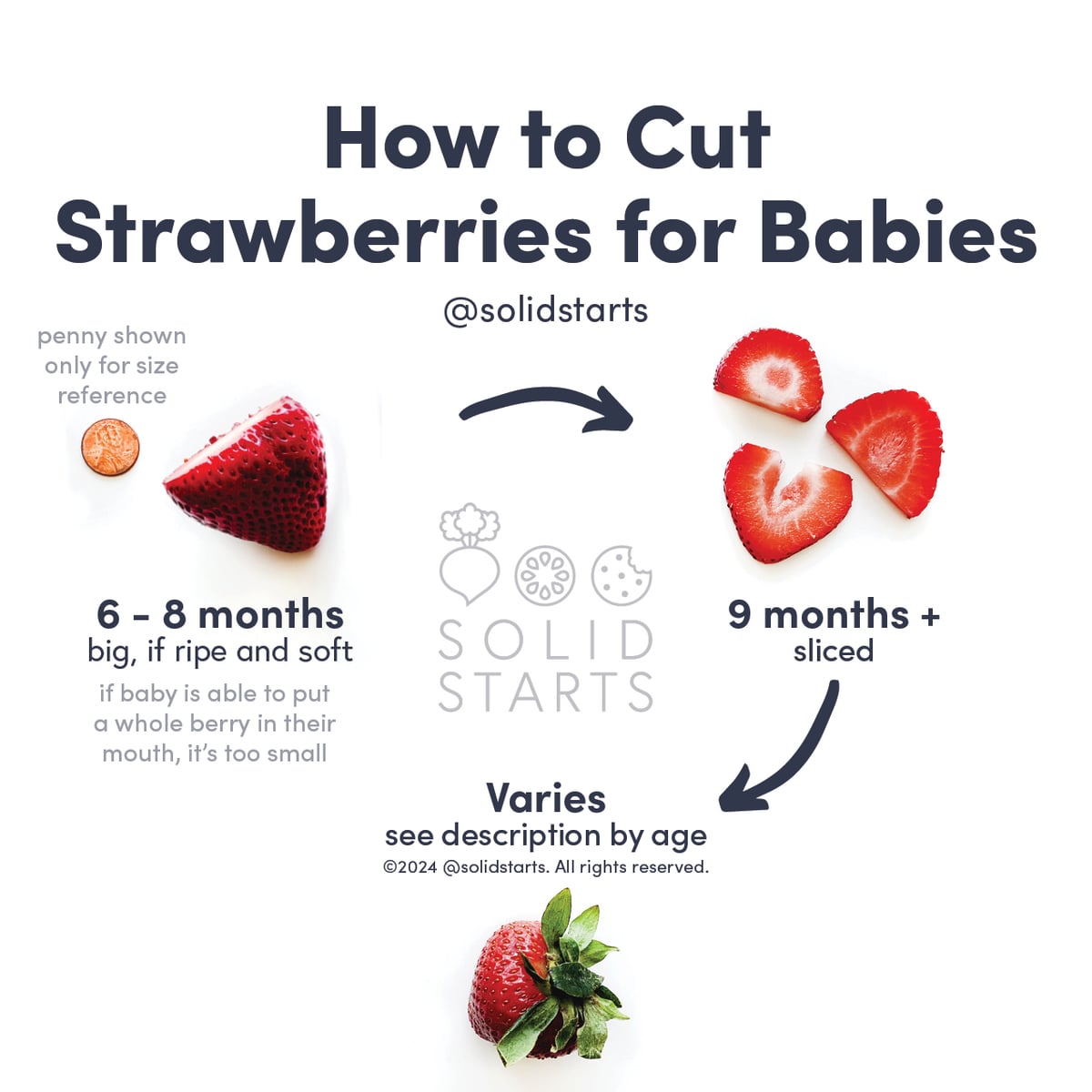
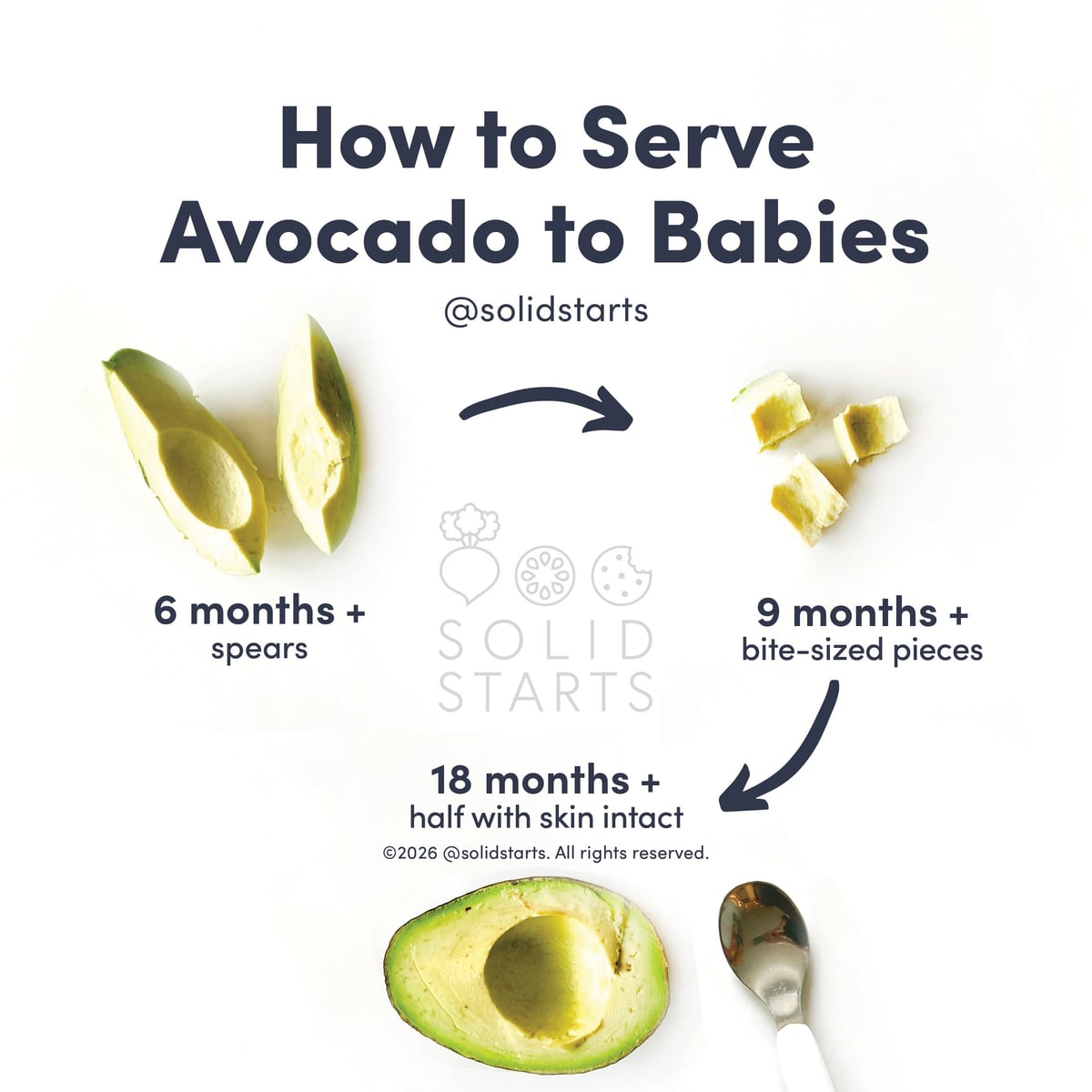
Most choking risk comes down to size and texture. Early on, big, soft, graspable pieces a baby can hold are easier to manage than small bits. The foods to watch are the hard and the round: whole nuts, whole grapes and cherry tomatoes (quarter them lengthways), popcorn, hard raw apple and carrot, chunks of sausage, and anything hard, sticky or bite-sized like lollies and marshmallows. Skip added salt and sugar, and let your baby feed themselves as much as possible – when they control what goes in and how fast, they tend to be safer eaters, not riskier ones.
Don’t tiptoe around allergens
It feels counterintuitive, but the current advice is to introduce the common allergens early, not avoid them. ASCIA, Australia’s peak allergy body, recommends offering them in the first year, from around six months, because delaying can actually raise the risk of an allergy developing. Work through them one at a time so you can spot any reaction, starting with well-cooked egg and a smooth peanut butter (never whole nuts), then keep the foods in regular rotation once they’re in. A reaction, if it comes, usually shows up within minutes to two hours.
And breathe
The mess is part of it. Squashed banana in the hair, more on the floor than in the mouth, a face like a finger painting – it all counts as learning. Follow your baby’s cues rather than the clock, don’t force a single bite, and let curiosity do the work. The aim isn’t a clean tray; it’s a confident little eater.
This article drew on guidance from Solid Starts (solidstarts.com), whose free First Foods database covers serving sizes, choking prevention and allergen tips for more than 400 foods, and from ASCIA (allergy.org.au). It is general information only and isn’t a substitute for medical advice; in an emergency, call 000.
Follow KIDDO on Instagram and Facebook, and subscribe to our weekly newsletter