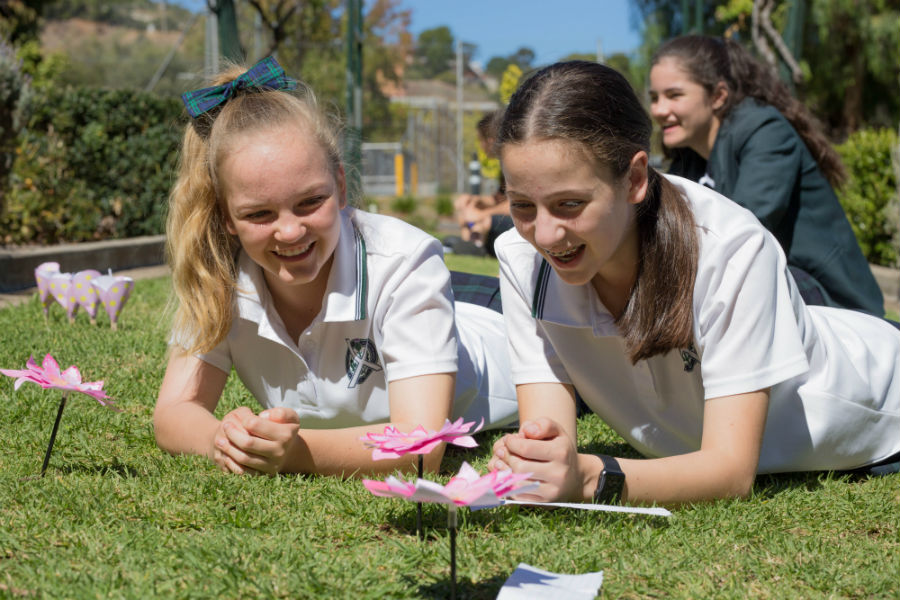
Seymour’s Year 8 girls are very excited to be working with Associate Professor Karin Nordström from Flinders University. Professor Nordström will be helping the girls understand pollinator choice in the face of declining bee populations. Professor Nordström will be guiding the girls to undertake an experiment she recently had published in the USA. The girls will be determining factors that affect the choices a pollinator makes by designing artificial flowers (lures) with different flora cues. The lures will be tested at Seymour College where the girls will gather data and interpret the results – possibly contributing to international research.
Prof Nordström’s research: http://bit.ly/NordströmPollinatorChoiceSC
‘With more than 80% of flowering plant species specialized for animal pollination, understanding how wild pollinators utilize resources across environments can encourage efficient planting and maintenance strategies to maximize pollination and establish resilience in the face of environmental change. A fundamental question is how generalist pollinators recognize “flower objects” in vastly different ecologies and environments.’ Excerpt from Prof Nordstöm’s research abstract.