Meet friends, make a village: Uniity launches friendship program

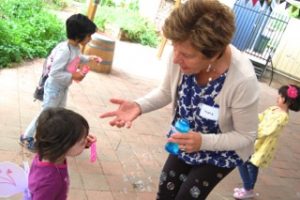
Local not-for-profit Uniity launches Find Your Village Morning Tea; a welcoming environment with a high tea experience, for people to simply connect, get to know each other and build friendships. The intent of the Uniity friendship program is for parents who may not have family nearby, and older people in the community who value family-like connections, to meet and form friendships.

Find your village: Uniity friendship Morning Teas

Founders of Adelaide not-for-profit organisation Uniity (Unifying Neighbourhood Intergenerational Interactions Together with You) Adrianna Pearce and Marigold White know first hand what it’s like to crave connection and support as a mother with a young family.

After losing her grandma the week before her first child was born, living in the day to day of what can be an overwhelming and lonely period with a new baby at the best of tiems, compounded by the sense of loss after farewelling a much loved family member, Adrianna admits it was a difficult time.

“I found being at home a lot during the day a shock” she says “that, plus losing my grandma meant it was a challenging time. I went for a walk around my neighbourhood and saw an Italian Nonna in her garden and so very much wanted to show off my baby and have a coffee and a chat.”

It was this moment that made Adri start thinking about how she could find a way to connect people that may be missing family and craving that emotional support.

A long way from her own parents in Ireland, Marigold also understood the longing for the simple connection of family for herself and her children.

After getting to know an older lady with whom she’d developed a friendship, Marigold could see the value in this type of connection and how mutually enriching the relationship was. Seeing how her daughters also benefitted greatly in having a grandmother figure in their lives nearby, and sharing in important family milestones together, reinforced in Marigold the value of having a village of support and friends who become like family, when you can’t be with your own.

These are the types of connections that Uniity hopes with foster with their Find Your Village Morning Tea events.

Creating connections and Enriching Lives with Find your Village Morning Tea
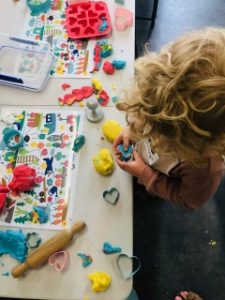
Find your Village Morning Tea, an event Uniity holds on the first Friday of every month, launching Friday August 7 in Brompton, is all about finding family-style connections.

The friendly and relaxed environment offers play activities set up for kids and is intended to draw on the experience of popping in to a good friends house for a coffee and a chat while the kids play.

The team at Uniity host these types of activities and events as the catalyst for people to meet and make lasting friendships.

With activities tailored to each specific neighbourhood, Uniity works to leverage off the unique culture of exisiting communities in order to create caring connections. Meaningful friendships and connections between older and younger generations provide emotional and practical support across all life stages, and it’s this type of joy and purpose that the Find your Village Morning Tea is looking to foster.

“We want to empower community and provide the motivation and inspiration for people to make the most of their neighbourhood, and to participate in activities that add value to their lives and wellbeing” says Adri.

Find Your Village Morning Tea provides a welcoming environment with a high tea experience, for people to simply connect, get to know each other and build friendships. The intent is for parents who may not have family nearby, and older people in the community who value family-like connections, to meet and form friendships.

Everyone is welcome.

For more information:

uniity.com.au

To RSVP to the next Find Your Village Morning Tea:

marigold@uniity.com.au

About Uniity

Uniity creates opportunities for people of different ages to meet and get to know each other.

​In recent decades, smaller families, busier lives, and greater mobility have all contributed to the separation of generations. Neighbours aren’t connecting like they once did. On an individual level some people may have missed out on certain family connections, or they may not have their family close by and some may never have had children and may be feeling like there is a void in their life. Uniity aims to foster these relationships for mutual benefit. These intergenerational friendships are also particularly valuable in the passing down of knowledge and wisdom to younger generations that might otherwise get lost.

Uniity is 100% volunteer run. It has been supported by the Office for Ageing Well through a mentorship with The Australian Centre for Social Innovation (TACSI).

Uniity is currently operating out of the suburb of West Croydon/Croydon, South Australia. We will host activities and events in other suburbs in accordance with our collaboration partners.

You might also like:

MumKIND: Small Things Done With Great Love

You may also like

Play All Day App creators Emma Meyer, Gemma Rooke and Jacqui Burton sitting outside on a colourful blanket.

Play All Day app helps parents reduce screen time through play

In the age of screens, Aussie mums launch app to bring back the magic of play. “Will you play with me?” Five little words that can spark overwhelm in even the most well-intentioned parents. Between busy schedules, mental load and constant demands, coming up with engaging activities can feel like just another task, often leading screens to become the easy fallback. Three Australian mums and play experts, Emma Meyer, Gemma Rooke and Jacqui Burton, know this struggle well. Together, they created the Play All Day app to help families rediscover simple, meaningful play at home. Gemma, a homeschool mum of two boys, has long used play as a core learning tool. “Before Play All Day, I was doing these activities with my own children and sharing them on social media,” she said. “Parents were eager for ideas to support their children’s development and while social media can be helpful for this, it can also be incredibly distracting and overwhelming. It’s easy to get sidetracked or save a bunch of content that you never return to.” She began developing an app that would remove the guesswork by curating evidence-based activities in one easy-to-use place. Partnering with early childhood educator Emma Meyer and entrepreneur Jacqui Burton, the idea quickly grew into a comprehensive resource for families. Emma’s background in early childhood and primary education helped shape the developmental focus of the activities. “A passion for play was instilled in me during my studies in early childhood education back in my university days,” she said. Observing her own children also inspired many of the ideas now included in the app. “For example, watching my children around the 10-month mark developing their pincer grip and trying to pick tiny bits of fluff up off the floor led to me creating opportunities for them to develop that grip and strength in their fingers, like the ‘cheerio pluck’ activity.” Simple activities for every age and stage The Play All Day app features a library of easy play ideas that can be set up at home using everyday materials. Activities can be searched by age, skill, activity type or even items already available around the house, supporting children from newborn through to the primary school years and beyond. Each activity includes clear instructions along with images or video to demonstrate how to set it up. “With the activities created by mums, they have been able to provide ideas that kids will actually be interested in and include plenty of great tips for making it simple,” Jacqui said. Why play matters more than ever In a world increasingly dominated by screens, experts warn that play-based childhood experiences are declining. Social psychologist Jonathan Haidt has raised concerns about screen time and children’s mental health, describing a shift from play-based childhood to phone-based childhood as a major contributing factor to rising mental health challenges among young people. A report by Common Sense found children aged eight and under spend around two and a half hours a day on screen media. By age four, more than half of all children own their own tablet, and 75 to 80 percent of parents report concerns about screen use. Another long-term study tracking children from infancy into adolescence found high screen exposure before age two was linked to measurable changes in brain development. These changes were later associated with slower decision-making at age eight and higher anxiety symptoms by age 13. “Overall, play gives children the opportunity to explore and make sense of their world in the ways that are most meaningful to them,” Emma said. “I believe play builds strong and self-aware individuals.” Supporting families and professionals alike Since launching in late 2025, the Play All Day app has gained traction internationally, with downloads across more than ten countries. Its audience extends beyond parents, with educators and health professionals also incorporating the activities into their work. Speech pathologist Jules Tushuizen, who has worked in child development for nearly two decades, says the benefits of play-based learning are clear. “The research is very clear — when children learn through play, they learn faster and retain more,” she said. “In our speech and occupational therapy sessions, we often spend time helping parents rediscover just how valuable play really is. It might look like fun, but that’s exactly the point. When children are engaged and enjoying themselves, their brains are learning.” For families feeling the pressure of raising children in a digital world, the app offers a practical way to reconnect, slow down and rediscover the simple joy of play — even if it just means enjoying a hot cup of coffee while the kids are happily engaged. For more information, visit: playalldayapp.com.au Follow KIDDO on Instagram and Facebook, and subscribe to our weekly newsletter

Read More